
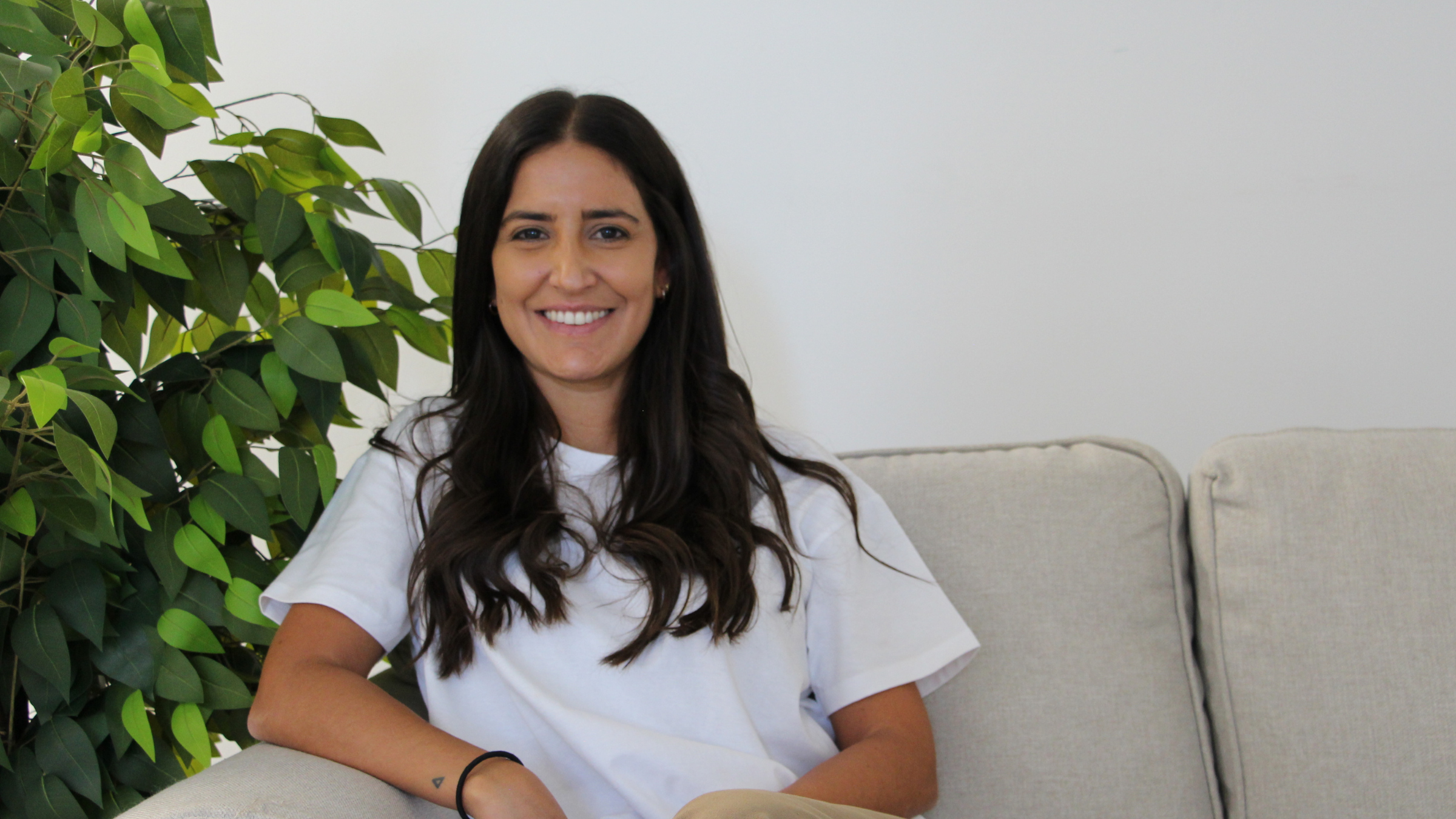
Carolina Benguigui, CEO of Kleo shares her perspective on one of the main challenges startups face: accessing the right funding at each stage of growth. In this interview, she discusses the most common mistakes when raising capital, how to combine public, private and bank financing, and what startups need to have in place to be truly ready to scale.
She also explains why Kleo has joined Startup Valencia as a supporter and the opportunities she sees within Valencia’s entrepreneurial ecosystem.
How did the idea for Kleo come about, and what barriers to accessing funding did you identify that led you to develop the platform?
The idea for Kleo came from experiencing these challenges first-hand over the past few years while working as an outsourced CFO for a number of companies. That is when you realise there is a major problem that causes founders a real headache: companies simply do not know where to look for funding.
The market is a maze. On top of that, the traditional process is weighed down by bureaucracy, lacks transparency and consumes valuable time that entrepreneurs should be spending on their businesses. We clearly saw the need to simplify all of this, untangle the processes and democratise access to funding so companies no longer have to search blindly.
How does your model work, and what advantages does it offer compared with the traditional way of looking for funding?
We take a 360-degree approach to funding. On the one hand, we have the platform and a Smart Matching product that recommends funding options tailored to each company and its particular stage.
But technology is only part of the equation. Although everything happens and is managed through the platform, we do not lose the human element. Whenever there is a question or a problem, our team is there to provide support throughout the process.
The difference compared with the traditional approach is huge. We speed things up, give companies a complete picture of the options that genuinely fit their needs, and remove much of the isolation and friction involved in the funding process.
From your experience, what are the main mistakes startups make when looking for funding, and what should they consider before starting the process?
The most common mistake is starting too late, when you are already under pressure and running out of cash. That leaves you with very little negotiating power.
Another frequent mistake is approaching potential funders without understanding which financial instrument you actually need. Before you start looking for capital, you need to have very clean numbers, up-to-date accounts, a realistic runway calculation and a clear understanding of exactly which milestones every euro you raise will be used to achieve.
What should a startup work on to be genuinely ready to raise funding and improve its chances of success?
The first thing is to understand that there are different funding instruments available and that each one requires a different type of preparation.
Beyond having a good product, a startup needs to demonstrate that it has a validated business model and real traction. Investors and financial institutions want to see consistent numbers, realistic projections and a management team that fully understands its key metrics, such as customer acquisition cost and customer lifetime value.
And, of course, you also need to be able to communicate all of that clearly and directly.
Kleo works with public funding, private investment and bank financing. How can a startup build a strategy that combines these different sources without becoming overly dependent on a single source of capital?
The key is diversification and understanding the timelines involved in each option. You cannot rely on a single source of funding because that leaves you in a very vulnerable position if things do not go according to plan.
Public funding can be extremely valuable at an early stage because it allows you to access capital without diluting equity. Bank financing and debt tend to make more sense once you have traction and assets to support them, while private capital can bring smart money when you are looking to accelerate growth.
Building a good funding strategy means aligning the application timelines for each option with your cash needs so that the different sources complement one another naturally.
How do a startup’s funding needs change as it scales, and what signals indicate that it is time to look for new sources of capital?
They evolve quite naturally. At the beginning, you are focused on survival and validation, relying on your own resources, friends and family, or public funding.
Once you start scaling, the focus shifts significantly towards commercial expansion and internationalisation. That is when you begin to need much larger injections of capital or more structured debt.
The clearest sign that it is time to look for new sources of funding is when your growth is being held back purely by a lack of liquidity to continue hiring or investing in the business. Another warning sign is when your runway falls below six to nine months and you need additional breathing room.
You are now joining Startup Valencia as a supporter. What encouraged you to take this step, and what opportunities for collaboration do you hope to find within its community?
We decided to take this step because Valencia has one of the most important entrepreneurial ecosystems, with a huge amount of talent and a real drive to build new things. We wanted to be part of that day to day and support entrepreneurs directly.
For us, joining Startup Valencia as a supporter is a natural way to stay close to the community, understand its funding needs first-hand and contribute our experience so that no great idea is prevented from scaling because it lacks the right financial support.
Valencia has an entrepreneurial ecosystem that is increasingly connected to investment and international markets. From your experience, what strengths does it have when it comes to attracting funding, and what could still be improved to help its startups grow and scale?
Valencia has some major strengths: an exceptional quality of life that attracts and retains top international talent, a highly connected and collaborative community, and a strong network of institutions and organisations such as Startup Valencia that actively support its development.
But if we want to continue scaling and improving, we still need to consolidate a stronger network of investors specialising in more mature growth stages. We also need to encourage the region’s larger traditional companies to invest more actively in startups through corporate investment.
If we continue simplifying processes and opening the door to later-stage investment, Valencia’s momentum will be very hard to stop.