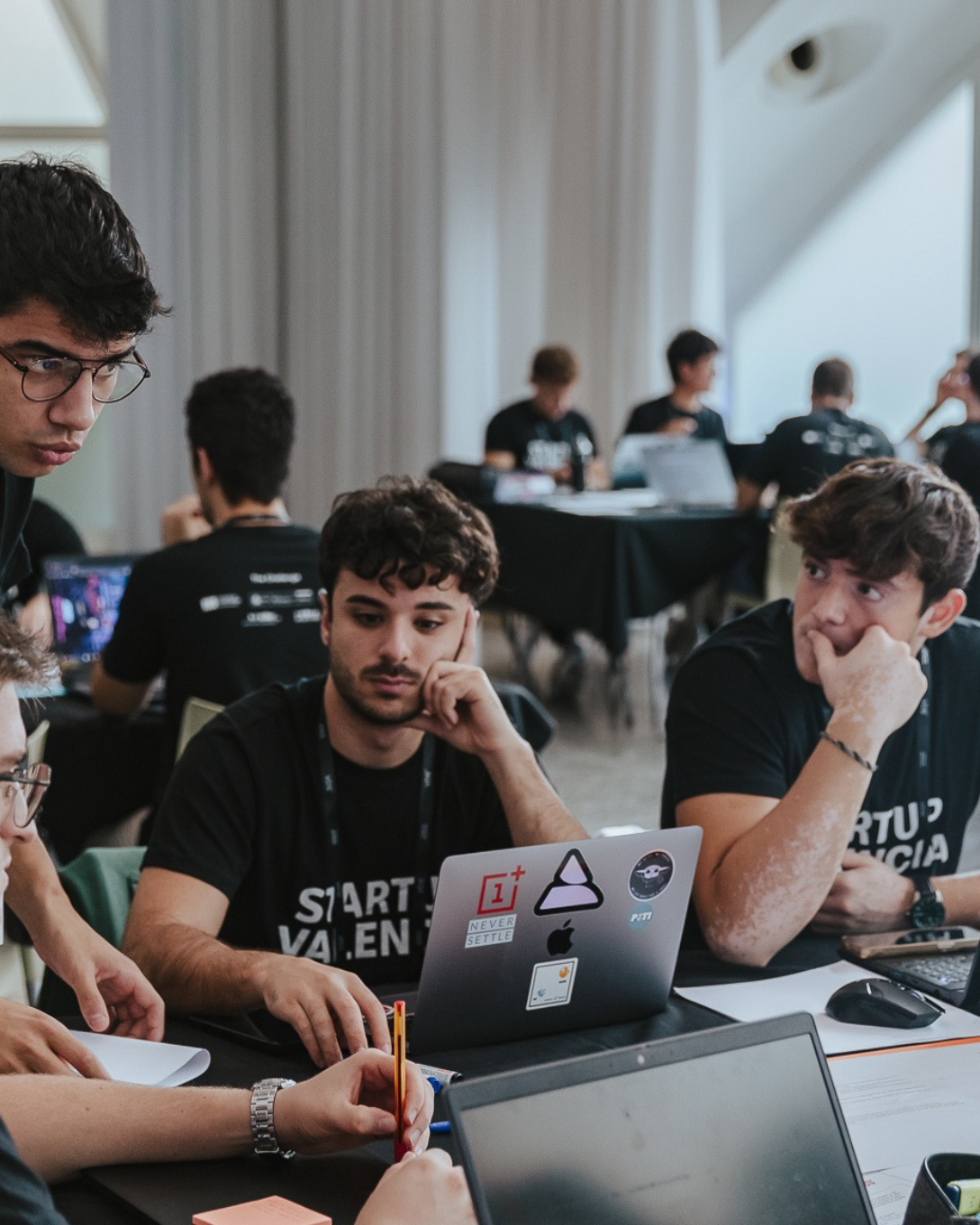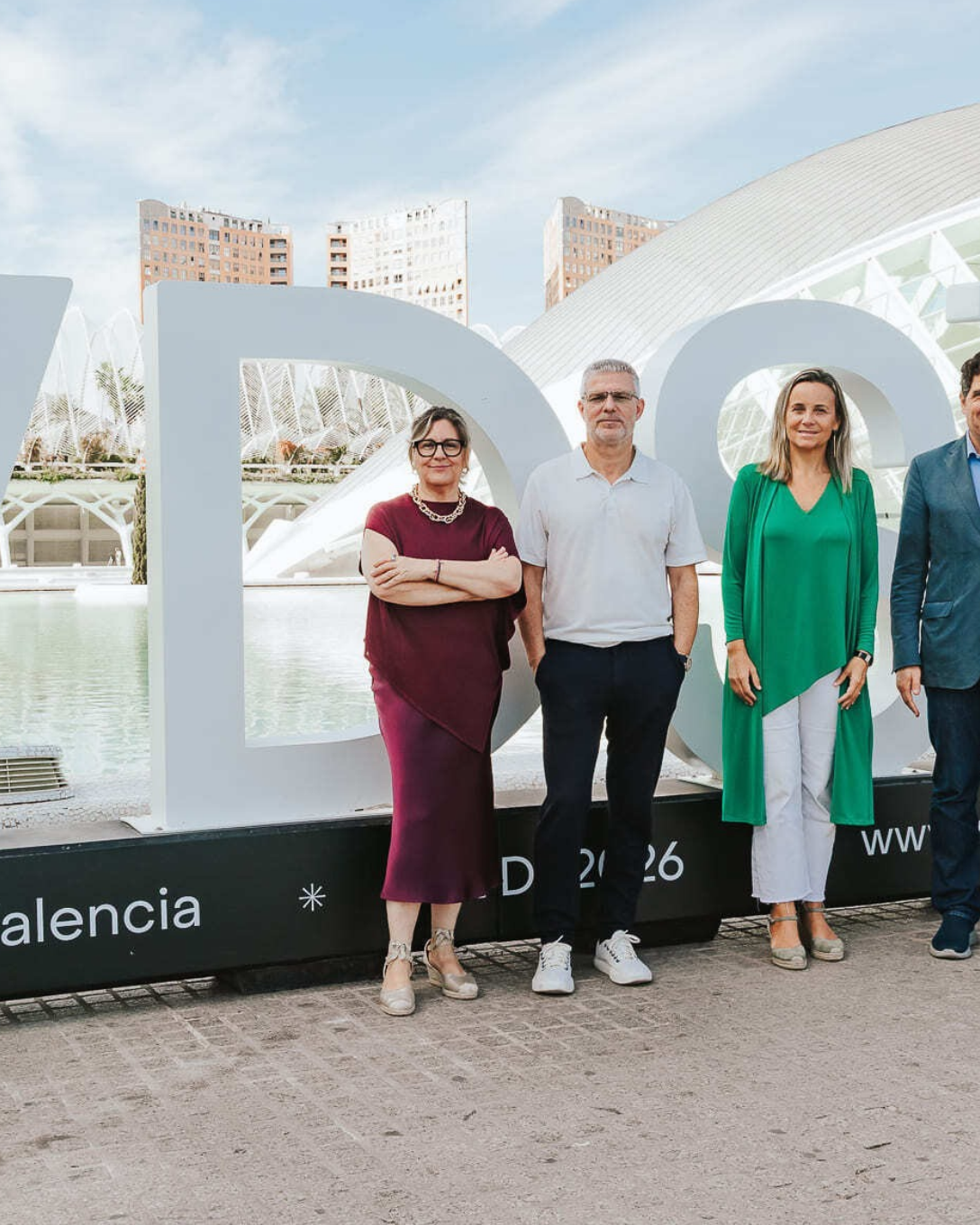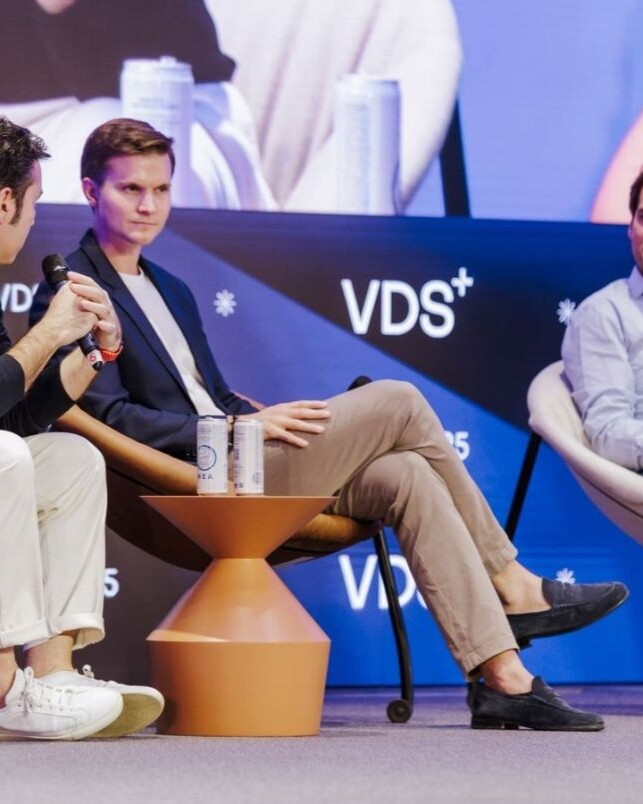

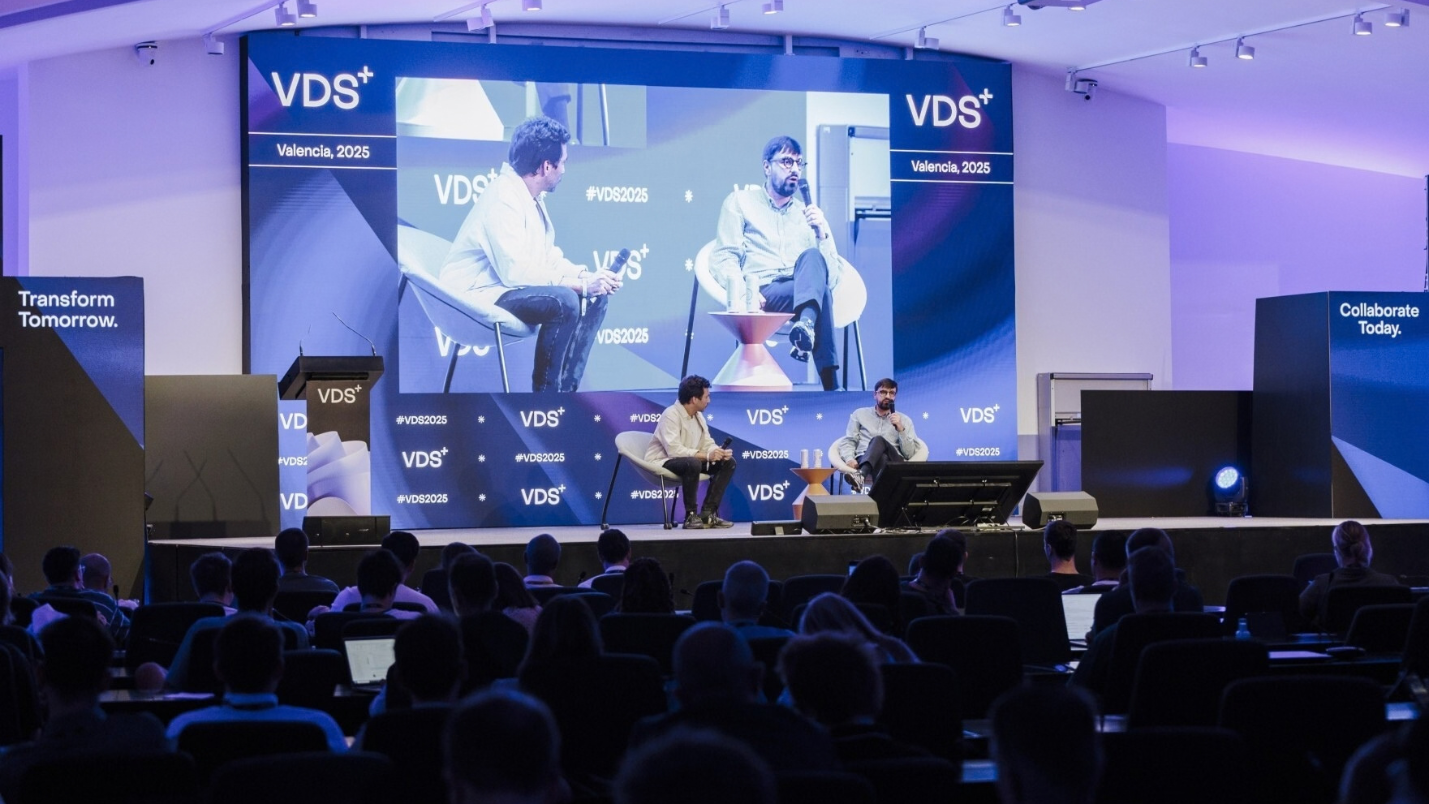
VDS 2026 has announced the agenda for its ninth edition, which on October 21 and 22 will turn Valencia’s City of Arts and Sciences into a meeting point for some of the leading international figures in technology, innovation and investment.
Organized by Startup Valencia, the international tech event will feature more than 200 sessions and 100 hours of content across eight stages covering the transformations redefining the economy and society: from the expansion of artificial intelligence towards increasingly autonomous systems to the rise of dual-use and defense technologies, neurotechnology, new ways of building and financing companies, the future of work, space, and the transformation of industries such as logistics, telecommunications, finance and audiovisual.
Under the concept GENESIS and the motto “Origin of What’s Next”, VDS 2026 will focus on the origins of the next generation of technologies, companies and models capable of transforming industries and addressing major global challenges. More than 600 speakers, 46% of them international, will take part in a program featuring representatives from NVIDIA, IBM, Spotify, ClickUp, AstraZeneca, Rolls-Royce, Applied Materials, Read AI, LG Technology Ventures, Miro, Qualcomm, Qonto, Preply, Plug and Play, Hostinger, Harvey AI, ElevenLabs, Poolside, INBRAIN Neuroelectronics and Red Points, among many other international companies and organizations.
Carl Lewis will be the most prominent name in an edition that expands the traditional boundaries of an international tech event to connect innovation, business and high performance. Winner of nine Olympic gold medals and recognized as World Athlete of the Century by the International Olympic Committee, Lewis will bring to VDS a career that places him among the greatest athletes in history.
An agenda featuring capital and global-scale companies
The business and investment dimension of VDS 2026 is also reflected in the companies represented on its agenda. 17 unicorns will be represented at this edition: ClickUp, Harvey AI, Creditas, Letgo, Domyn, Ixigo, Miro, Preply, Nord Security through Saily, Hostinger, Urban Sports Club, PayFit, ElevenLabs, Poolside, Kraken, OVHcloud and Qonto.
They will be joined by more than 20 scaleups, including Trucksters, Maisa AI, Prophero, Red Points, Sesame, PLD Space, Read AI, Quibim, Oxylabs, Shakers, eleQtron, Luzia, Fracttal, Imperia, Uvify, INBRAIN Neuroelectronics, Duponte, Voltrac and SeQura, among others. Together, the participating startups have raised more than €26.75 billion.
Capital will also play a prominent role. More than 50 venture capital funds and investors will be present at VDS 2026, including LG Technology Ventures, Planet A Ventures, Cathay Innovation, Antler, Archangel, PT Capital, Spintop Ventures, A.GAIN, JME Ventures and Kibo Ventures. Together, the participating investors manage more than €300 billion in assets.
Artificial intelligence enters a new phase
Artificial intelligence will take center stage from the first day. The program will explore an evolution that goes far beyond generative AI: agents capable of operating autonomously, models applied to the physical world, new technology infrastructures and companies built from the ground up around this new generation of intelligence.
Linda Hong, Founder and CEO of Lychee Labs, will explore the potential of adaptive AI and foundation models applied to the physical world. Her company develops industrial artificial intelligence based on physical models with applications across four critical industries, from batteries and advanced chemicals to precision devices and semiconductors.
David Shim, Co-founder and CEO of Read AI, will examine the evolution towards agentic AI systems capable of coordinating different tools and acting autonomously. Read AI already has more than five million monthly active users and is incorporating capabilities that can act on behalf of users based on the context generated in meetings and professional communications.
Chris Cunningham, Co-founder of ClickUp, will bring the conversation into the business sphere to analyze how artificial intelligence is changing B2B growth strategies. ClickUp reached a $4 billion valuation after closing a $400 million Series C, becoming one of the leading international productivity companies.
The application of this technology to highly specialized sectors will also be explored by Jorge Bestard, VP EMEA at Harvey AI. The legal artificial intelligence company reached an $11 billion valuation in 2026 amid its international expansion.
NVIDIA will also have a prominent presence through Yasmina Benkhoui, Agentic Strategist AI, who will participate in two sessions focused on agent networks and the infrastructure required to develop systems capable of operating autonomously for increasingly long periods. Her participation comes as NVIDIA closed its 2026 fiscal year with $215.9 billion in revenue, up 65% from the previous year.
The Future Stage will expand this conversation with Tycho van der Ouderaa, Senior Engineer at Qualcomm, and representatives from ElevenLabs and Poolside, who will address topics ranging from the efficiency of new models to the challenge of building and scaling major artificial intelligence companies from Europe.
On the second day, Dmytro Voloshyn, Co-founder and CTO of Preply, will focus on how to scale generative artificial intelligence to enhance learning without replacing the role of people. Preply reached a $1.2 billion valuation in 2026 and connects more than 100,000 tutors with students across 180 countries.
Building, financing and scaling global companies
The agenda will also bring together founders, executives and investors who have played direct roles in some of the major technology growth stories of recent years.
Ana Sandra Ruiz, Senior Director at Spotify, will share her experience scaling one of the world’s largest digital platforms. Spotify currently reaches 777 million monthly active users and 300 million Premium subscribers across 184 markets, a scale from which she will explore the decisions required to take a digital product to a truly global level.
Jaïr Halevi, Head of Culture at Pygma and Head of Startups at Miro, will bring his experience in culture, team building and startup development from a platform used by more than 100 million people and 250,000 companies.
Also participating will be Héctor Mata, Founder and CEO of Shakers, and Giedrius Zakaitis, CEO of Hostinger, a technology company serving more than five million users across more than 150 countries that closed 2025 with €275.4 million in revenue, up 51% from the previous year.
The connection between the Asian and European technology ecosystems will come through Dong-Su Kim, CEO of LG Technology Ventures, a firm managing close to $1 billion to invest in early-stage and growth companies in artificial intelligence, biotechnology, cleantech and other strategic technologies. Its portfolio includes companies such as Anthropic, Figure AI, ElevenLabs, May Mobility and Airalo.
Saeed Amidi, Founder and CEO of Plug and Play, will bring the perspective of one of the world’s largest open innovation platforms. Its ecosystem connects more than 100,000 startups and has contributed to the growth of more than 30 companies that have reached unicorn status. Together with Carolin Wais, Partner EMEA Ventures at Plug and Play, he will explore how regional ecosystems can become platforms capable of producing companies with global reach.
The transformation of large organizations will also play a prominent role. Horacio Morell, General Manager of IBM for Spain, Portugal, Greece and Israel, will bring the perspective of a company celebrating 100 years in Spain this year on how to deploy artificial intelligence, hybrid cloud and quantum computing at enterprise scale. IBM also operates the first IBM Quantum System Two in Europe in San Sebastián, one of the projects placing Spain within the international development of quantum computing.
Technological transformation within major corporations will also feature on the agenda. Patricia Tintori, Change & AI Transformation at AstraZeneca, will provide the perspective of implementing artificial intelligence at scale within a pharmaceutical company that closed 2025 with $58.7 billion in revenue.
Szymon Kukulski, VP, Head of People Insights at Rolls-Royce, will explore how data is transforming talent management and people-related decision-making within an organization with a global workforce of 42,600 employees.
Capital will once again be one of the program’s major themes. Jacky Abitbol, Managing Partner at Cathay Innovation; Samuel Gil, Managing Partner at JME Ventures; and Aquilino Peña, Co-founder and Founding Partner at Kibo Ventures, will discuss what a startup needs to be ready to raise international investment.
The rise of artificial intelligence is also changing the way companies are created and financed from their earliest stages. Kai Brandt, Co-founder and CEO of Enginy, and Luis Garay, Partner at Samaipata, will explore this new reality, while Enrique Linares, Founding Partner at Plus Partners, will take part in a conversation on funds of funds and strategies for scaling globally.
Defense, dual-use technologies and strategic autonomy
Defense and dual-use technologies will gain prominence at VDS 2026 against an international backdrop shaped by technological acceleration, security and the debate around European strategic autonomy.
The Main Stage will host conversations on the speed at which disruptive technologies are reaching the battlefield and Europe’s ability to transform innovation into solutions that can be deployed in real-world environments.
Participants will include Teemu Seppälä, Technology and Innovation Director at DEFINE Finland, who works on developing a dual-use technology ecosystem aimed at strengthening Finland’s and NATO’s capabilities and advancing European strategic autonomy.
Also participating will be Taras Tarasenko, Member of the Verkhovna Rada of Ukraine, whose parliamentary work addresses, among other issues, policies aimed at a community of more than 1.5 million veterans and their role in the country’s economic and social recovery.
They will be joined by Marco Grancagnolo, from the European Innovation Council and SMEs Executive Agency, and Toni Laine, from the Regional Council of Häme.
In parallel, the Future Stage will delve into areas such as electronic warfare, drones and communications, artificial intelligence, autonomy and robotics, defense investment and supply chain resilience. The program will also bring the conversation into the operational sphere to examine which technologies actually work when they leave the laboratory and reach real-world environments, with representatives from the military and security sectors of Ukraine and Spain.
Health, neurotechnology and new frontiers in medicine
The convergence of science and technology will define another major area of the program.
The Innovation Stage will bring together some of the leading figures in neurotechnology from research, business and regulation. José Carmena, an international pioneer in brain-computer interfaces, co-founded iota Biosciences, a neurotech company acquired by Astellas in a deal valued at up to $304 million. He will be joined by Ana Maiques, Co-founder and CEO of Neuroelectrics, a Spanish neurotechnology company whose technology is present in 74 countries, with more than 3,000 devices deployed and 100 clinical trials.
The conversation will also feature Javier Mínguez, Co-founder of Bitbrain and Professor at the University of Zaragoza, whose company has accumulated more than 450 scientific publications, 22,000 citations and 110 R&D projects; and José M. Muñoz, Founder and Director of the International Neurotechnology Governance Observatory (INEGOV) and Faculty Associate at Harvard, author of more than 100 publications on the ethical, legal and social implications of neurotechnology. The four will explore how to move scientific advances from research into industry and how to build an ecosystem capable of doing so at scale.
Carolina Aguilar, Co-founder and CEO of INBRAIN Neuroelectronics, will take part in a conversation on the future of neurotechnology, while other sessions will delve into the integration of artificial intelligence-based solutions into healthcare systems.
The agenda will also explore the convergence of product design, artificial intelligence and DNA analysis with María Camila Puentes, Founder and CEO of Duponte, while opening conversations around longevity, neuroprosthetics and the future of medicine.
From space to high performance
The connection between high performance, leadership and building a long-term career will also play a prominent role in the program.
Carl Lewis will delve into the principles behind an exceptional sporting career, with nine Olympic gold medals and ten Olympic medals in total, bringing that experience into conversations around performance, leadership and sustained excellence.
César Azpilicueta, UEFA Champions League winner and a leading figure in European football, will connect his experience in elite sport with the business world and explore how lessons such as leadership, pressure management and long-term performance can be applied beyond competition.
Víctor Claver, former NBA player and startup investor, will bring the principles of elite performance into the business and technology environment after a career that includes three NBA seasons, two Olympic medals and the 2019 World Championship with Spain.
Competitive sport will also be represented by Paul Jouffreau, driver and entrepreneur at Ascension Motorsport. At just 22 years old, he has become the youngest race winner in NASCAR Euro Series history and has won three titles in the competition.
Analog astronaut Carmen Köhler, from the Austrian Space Forum and Founder and CEO of P3R GmbH, will bring the perspective of space exploration to VDS. With a PhD in Physics and a background in Mathematics, she has participated in analog missions that recreate on Earth some of the conditions of future space exploration.
Meanwhile, space engineer and analog astronaut Iñigo Muñoz, from ESPACE Horizons, will explore the role of the human factor and teams in the success of space missions in the workshop No Mission Without the Team.
Technology transforming industries
Beyond major technological advances, the agenda will also show how their application is transforming entire industries.
Kostas Mallios, Corporate Vice President, CSD Europe at Applied Materials, will bring the perspective of one of the key companies in the global semiconductor industry at a time when the growth of artificial intelligence is driving new computing capacity and technology infrastructure requirements.
Lucía Gastélum, Director of Product and Design at Movistar Plus, will participate in a conversation on new ways of connecting content, identity and consumption.
Supply chain transformation will be another prominent area. Ricardo Román, CSO of Fracttal; Álvaro Bernabé, CEO of Imperia; and Norman Koerschulte, CEO of Morpheus Logistik, will explore how automation, data and new digital tools are changing asset maintenance, planning and logistics.
Quantum computing will be represented by Jan Leisse, CEO of eleQtron, while Vykintas Maknickas, CEO of Saily, will explore the future of telecommunications.
Digital finance will bring together Lena Hackelöer, Founder and CEO of Brite Payments; Sergio Furio, Founder of Creditas; Lorenzo Pireddu, Managing Director Southern Europe at Qonto; and Eli Velásquez, CEO of Capital Stack Investors, in a conversation on the transformation of capital and financial services.
Audiovisual creation is also entering a new era. Iñaki Berenguer, Co-founder of Mito AI, will analyze how generative artificial intelligence is transforming an industry with more than a century of history.
With this agenda, VDS 2026 will bring together in Valencia over two days some of the conversations defining the present and future of technology: from artificial intelligence systems beginning to operate autonomously to technologies transforming health, defense, talent, industry and space. A program connecting in Valencia those who develop technology, build companies, mobilize capital and bring lessons from some of the world’s most competitive environments.