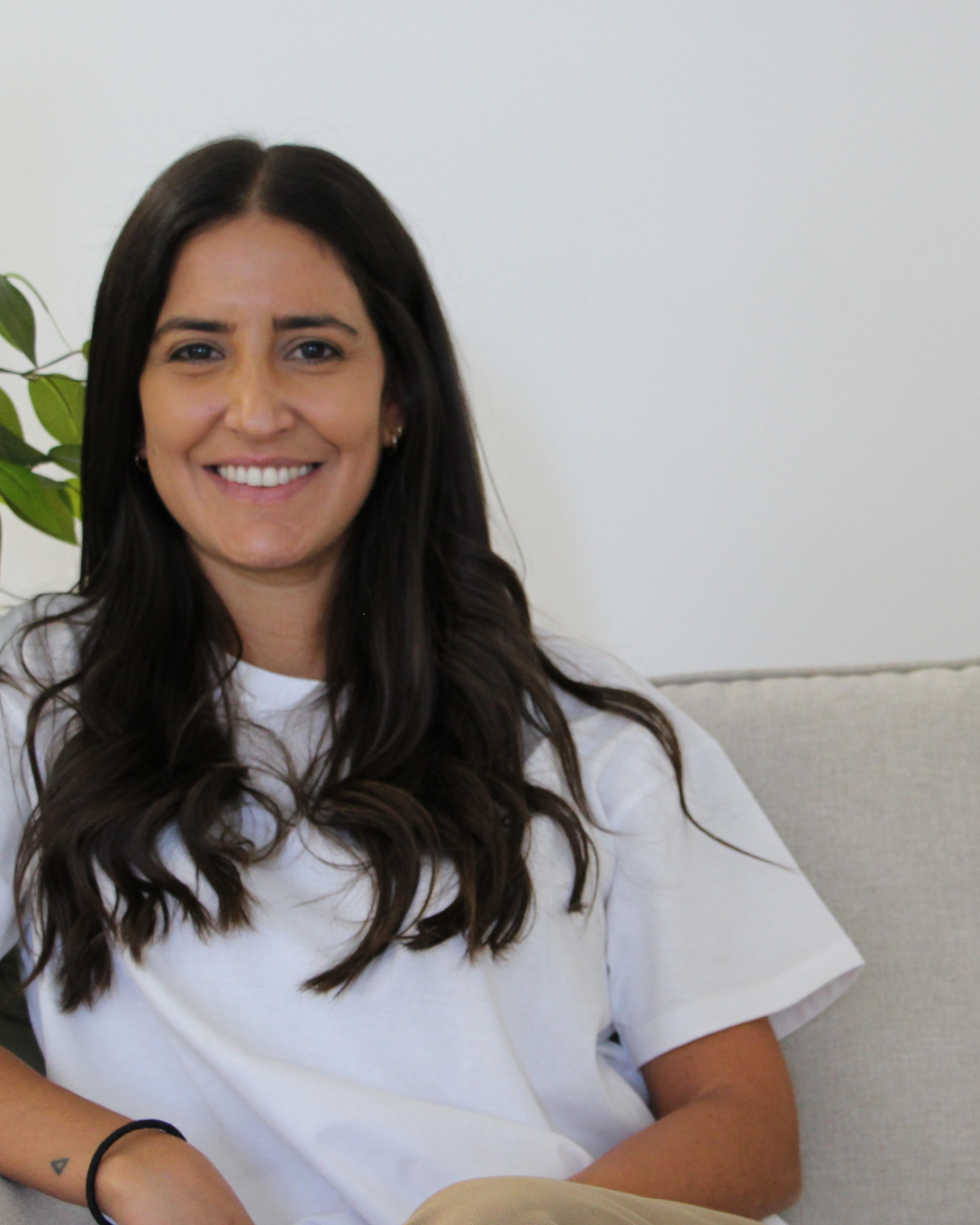


José Luis Noriega, Partner Sales at ClickHouse, discusses how artificial intelligence and real-time analytics are transforming the way companies use their data and build new products.
In this interview, he explores the rise of agentic AI, the importance of having infrastructure capable of responding in real time, and the role of cloud and open source in this new landscape. He also explains why ClickHouse has decided to strengthen its relationship with Startup Valencia and how Valencia’s tech ecosystem can continue to become more competitive in areas such as AI, data and cloud technology.
For those who are not yet familiar with ClickHouse, how would you define your technology and what sets you apart in the analytical database market?
ClickHouse is an open-source, column-oriented, real-time analytical database. It is primarily offered as a managed service through ClickHouse Cloud, available on AWS, Google Cloud and Azure. It is designed to query huge volumes of data, billions of rows, and return results in milliseconds, without having to wait for batch processes or incur disproportionate costs.
We stand out in three areas:
– Performance: market-leading query and ingestion speeds, even under high concurrency.
– Efficiency: very high compression and a cloud-native architecture that separates storage and compute. Each company scales only what it needs and pays only for what it uses.
– Simplicity and openness: ClickHouse Cloud removes operational complexity, including scaling, backups, high availability and security, so teams can focus on their product rather than infrastructure. In addition, because it is open source and uses standard SQL, there is no dependency on a single vendor and the learning curve is short.
With the addition of Langfuse, the leading open-source platform for LLM observability, we have expanded our offering to cover the full lifecycle of AI applications. Markdown pegado
What types of organizations get the most value from your technology, and where are you seeing the strongest demand?
Organizations that benefit the most are those where data is part of the product or the business itself, rather than simply being used for internal reporting. This ranges from fast-growing startups to large technology companies, fintechs, e-commerce businesses, gaming companies, telecoms and adtech.
The use cases seeing the strongest demand are:
– Customer-facing analytics: dashboards and metrics embedded in SaaS products, where thousands of users are querying data at the same time.
– Observability: logs, metrics and traces at scale, as a more efficient alternative to traditional solutions.
– Real-time analytics: fraud detection, operational monitoring, personalization and dynamic pricing.
– Cloud data warehousing: companies looking for better performance and more predictable costs than traditional warehouses.
– AI and LLM observability: this is the fastest-growing area. With Langfuse, we are seeing very strong adoption among startups building AI products. They can get started in minutes with Langfuse Cloud and ClickHouse Cloud, without having to manage infrastructure, and scale with us as they grow. Markdown pegado
How are analytical technologies changing the way companies make decisions?
We have moved from making decisions by looking at the past, through weekly or monthly reports, to making decisions in real time. When a query takes milliseconds instead of hours, the question the business asks changes. It is no longer “What happened last month?” but “What is happening now, and how do I respond?”
We are also seeing data become much more democratized. Analytics is no longer confined to the BI team. It reaches product, operations, sales and, increasingly, end customers themselves. And the next step is already here: automated or AI-assisted decisions, where systems and agents act on data without manual intervention. Markdown pegado
Artificial intelligence depends heavily on the quality of data and the speed at which it can be accessed. What role does ClickHouse play in this new landscape?
AI is only as good as the data it can access, and only as fast as the infrastructure supporting it. ClickHouse plays a role at several levels:
– AI observability and quality with Langfuse: putting a model or agent into production is only the beginning. After that, you need to understand what it is doing, how much it costs, where it fails and how to improve it. Langfuse makes it possible to trace and debug agent workflows, run evaluations and manage prompts continuously. Any team, no matter how small, can start using it from day one. It is already used by everyone from startups to a significant share of Fortune 500 companies.
– Data for agents: AI agents generate far more queries than a human, and they do so unpredictably. You need a database capable of responding in milliseconds under high concurrency. That is why we offer integrations such as our MCP server, so LLMs can query data directly.
– Vector search combined with analytics: we make it possible to combine similarity search with traditional analytics in the same system, simplifying the architecture.
– Data preparation: processing and exploring large datasets to train and evaluate models.
In short, with ClickHouse and Langfuse, we offer a complete cloud and open-source stack for building, monitoring and improving AI applications at scale. Markdown pegado
What trends will shape the evolution of data analytics and technology infrastructure over the next few years?
– Agentic AI as a new “user” of data: before long, machines will make more queries than people, which requires cloud infrastructure designed for that reality.
– AI quality as a discipline in its own right: just as observability became essential in traditional software, evaluating and monitoring LLMs and agents in production will become standard practice. This is precisely the space Langfuse operates in.
– Real time as the standard: batch analytics will gradually be limited to very specific use cases.
– Efficiency and cloud cost control: after years of unchecked growth in cloud spending, companies are prioritizing managed services with measurable performance per euro and pay-as-you-go models.
– Open architectures: open formats such as Apache Iceberg and data lakehouses reduce dependency on a single vendor and make it possible to query data wherever it lives.
– Data sovereignty and regulation: in Europe, the AI Act and GDPR will make where and how data is processed increasingly important. This is why managed cloud services that allow companies to choose the region where their data is stored are becoming more relevant, such as ClickHouse Cloud and Langfuse Cloud, both of which have European regions. This allows companies to comply with regulation without sacrificing scalability or operational simplicity. And because both are open source, organizations that need full control can also deploy them on their own infrastructure. Markdown pegado
What motivated you to become a Startup Valencia supporter?
ClickHouse started as an open-source project and has grown thanks to its developer community. Many of our most active users are startups that begin with limited resources and need data infrastructure that can scale with them. Startup Valencia brings together exactly that kind of company: technical, ambitious teams with an international mindset.
In addition, Valencia has established itself as one of Spain’s most dynamic innovation hubs, and we want to be close to startups from their earliest stages. That allows us to help them make good architectural decisions from the beginning, rather than arriving when they already have a scalability or cost problem. Markdown pegado
How does this collaboration fit into your growth and business development strategy in Spain and Europe?
Europe is a strategic market for ClickHouse. We have strong roots in the region, a growing team, and European regions for both ClickHouse Cloud and Langfuse Cloud. This allows companies to comply with GDPR and the AI Act without sacrificing scalability.
In Spain, we are seeing growing adoption among both large companies and startups in AI, fintech and SaaS. Our strategy is heavily community-driven, through meetups, technical training and direct relationships with developers. Working with ecosystems such as Startup Valencia allows us to grow organically, understand the challenges local companies face first-hand and support them as they scale. Markdown pegado
What opportunities do you hope to find by collaborating with the startups in the Startup Valencia community?
We hope to meet startups building products where data and AI are a core part of the business and help them grow faster. More specifically:
Technical support: sharing best practices in data architecture, observability and AI applications from day one.
Access to leading technology: enabling them to use ClickHouse Cloud and Langfuse Cloud without upfront infrastructure investment and scale efficiently.
Local success stories: discovering projects that, over time, become benchmarks for the ecosystem and examples of what can be built from Valencia.
Mutual learning: startups give us extremely valuable feedback on new use cases, especially in agentic AI, and that directly influences how our product evolves. Markdown pegado
How can an innovative ecosystem like Valencia’s continue to become more competitive in areas such as artificial intelligence, cloud and big data?
Valencia already has many strengths: technical talent coming from its universities, quality of life that helps attract international professionals, a growing entrepreneurial ecosystem, and leading events such as Valencia Digital Summit. To continue becoming more competitive, we would highlight:
– Embrace the cloud from day one: managed services such as ClickHouse Cloud or Langfuse Cloud allow a Valencia-based startup to use the same infrastructure as leading AI companies, without upfront investment or dedicated infrastructure teams. They can focus their talent on the product and scale globally.
– Take advantage of open source: it provides flexibility, avoids dependence on a single vendor and makes it easier for developers to learn and experiment.
– Connect talent with cutting-edge technology: practical training in AI, data engineering and cloud.
– Collaboration between startups, corporates and universities: real use cases, pilot programs and knowledge transfer.
– Build with a global mindset from day one: products designed to scale internationally.
– Invest in community: meetups, technical events and developer communities are what truly create an ecosystem. At ClickHouse, we strongly believe in this model and are very happy to contribute in Valencia.
– Attract specialized investment in infrastructure, data and AI, not just applications. Markdown pegado
What role do you think VDS plays in this strategy?
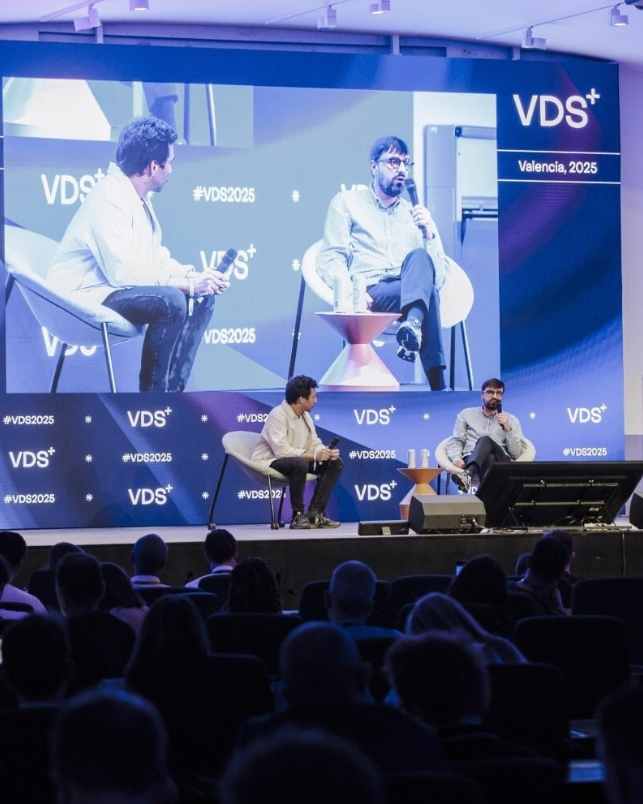
For us, VDS is an opportunity to share how real-time analytics and AI are changing, meet in person the startups we work with through Startup Valencia, and strengthen our presence in Spain. We also see it as a reflection of the ambition of Valencia’s ecosystem: thinking globally from day one, which is exactly what we look for in the companies we work with. Markdown pegado