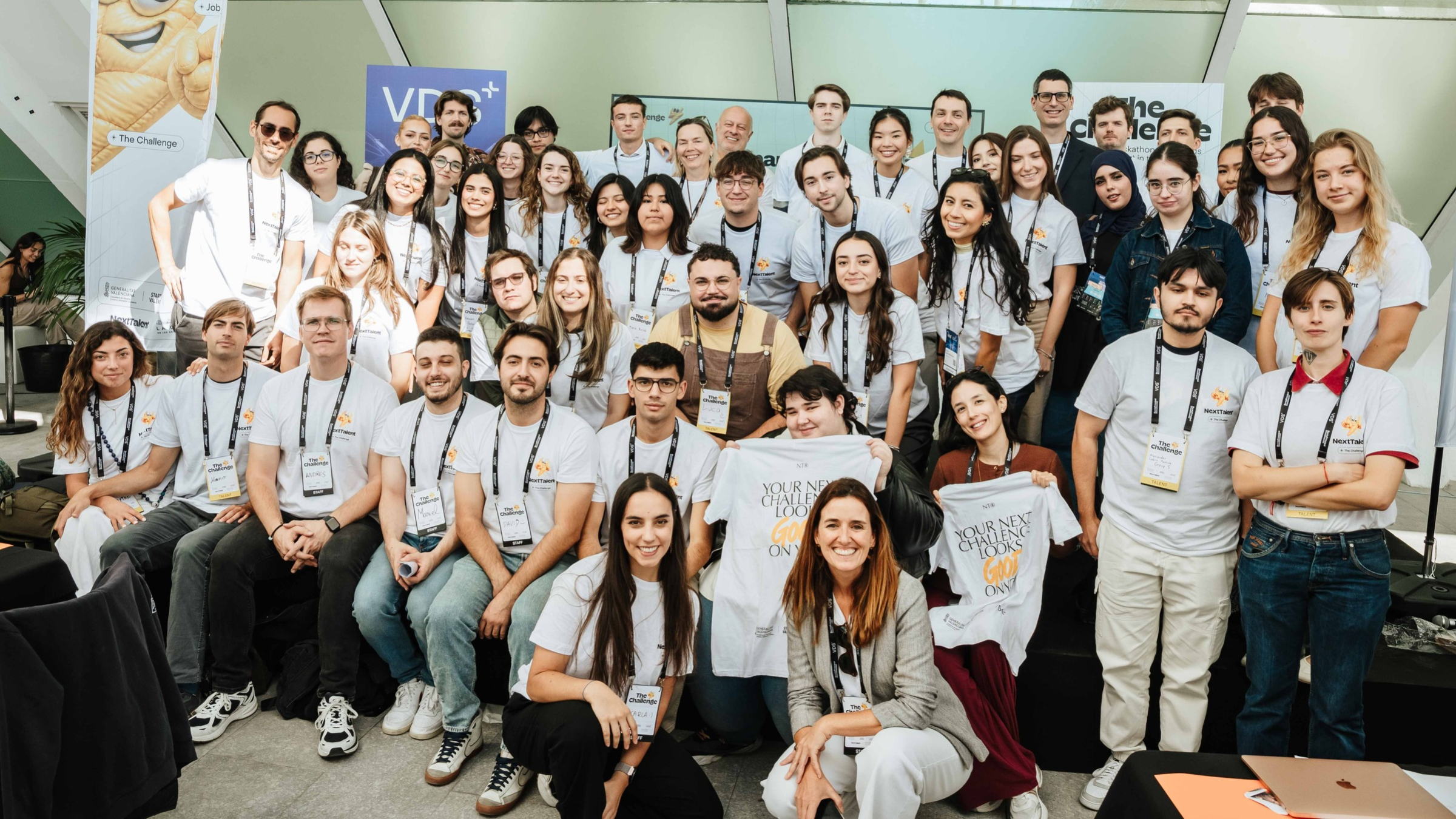
The NextTalent Challenge 2026 brought together 65 participants at VDS to develop innovative solutions to the climate challenges facing rural Spain. Held on October 21 and 22 at the City of Arts and Sciences in Valencia, the competition, organised by Startup Valencia, concluded with PRISMA CLIMA taking first place for a project that uses weather and satellite data to identify wildfire, flood and drought risks.
Part of the VDS NextTalent programme, the climate tech hackathon brought together eight multidisciplinary teams to explore new approaches to climate risk prevention, resource management and economic development in rural areas.
Turning rural Spain into a Climate Tech Innovation Lab
Under the challenge “España Rural, Laboratorio Climate Tech” (Rural Spain, a Climate Tech Laboratory), set by Enisa, participants were asked to address a key question: how can rural areas become places where climate technologies are developed, tested and brought to market?
The challenge focused on a common obstacle for climate tech startups. Before securing customers or investment, companies often need to demonstrate that their technologies work in real-world conditions. Yet many lack access to the funding, testing environments and partnerships required to do so.
Over two days, the eight teams developed proposals to overcome these barriers by connecting startups with local authorities, agricultural cooperatives, businesses, investors and other stakeholders.
The competition began with an online preparation session on October 14, followed by an intensive programme during VDS 2026 based on design thinking. Participants worked through problem identification, idea development, prototyping and business model design, supported by four coaches, more than nine mentors and facilitation from The Impact Project, with the involvement of its founder, Ana Carrau, and Carla Barreiro, Design Thinking Specialist at The Impact Project.
A key requirement was that the proposed solutions could be tested through 12-week pilot projects, while taking into account Enisa’s procedures and the responsibilities of the relevant public authorities.
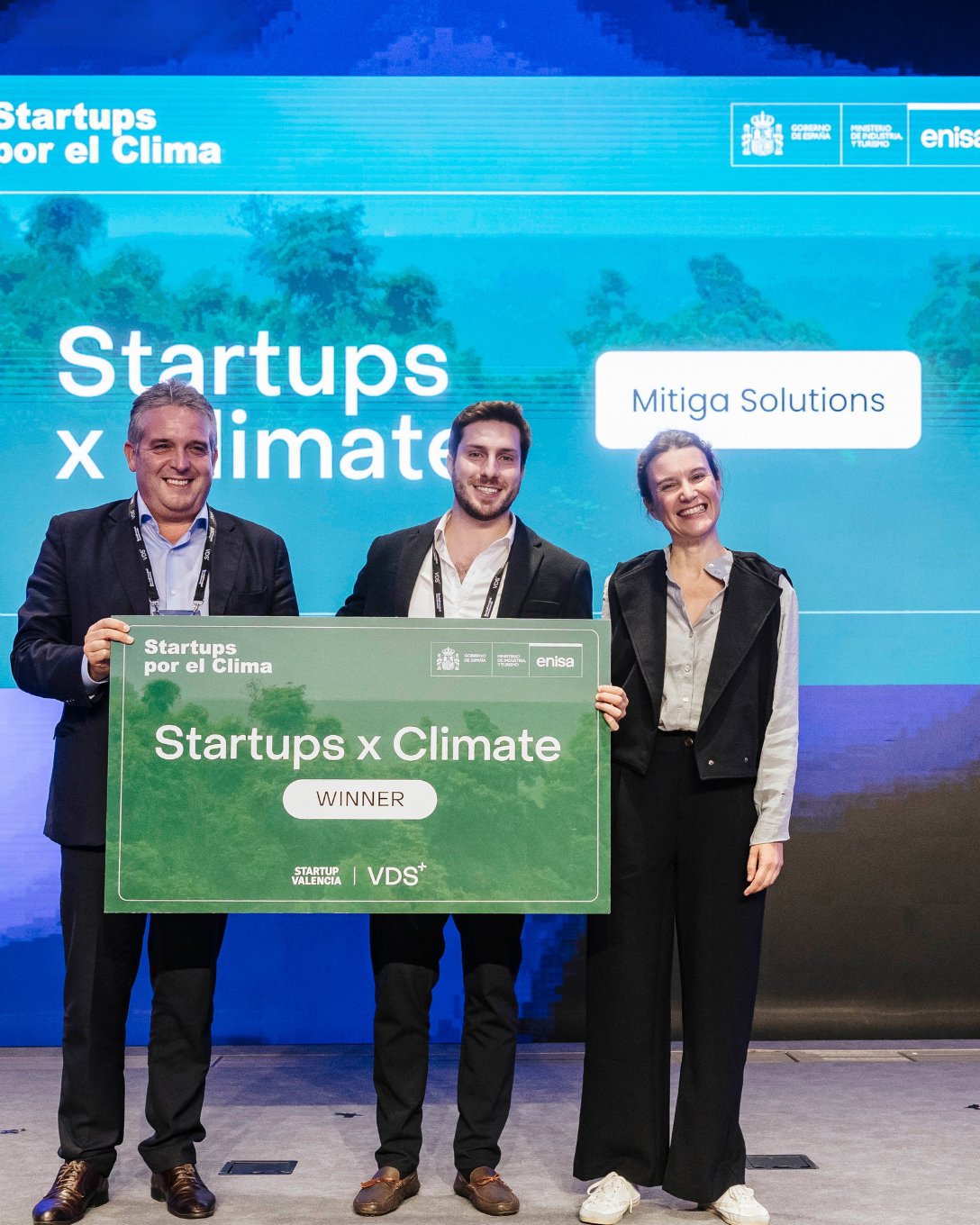
On October 22, all eight teams presented their projects in three-minute pitches before mentors and a jury. RENEXA, PRISMA CLIMA, CLIMATCH and SEEDMATCH advanced to the semifinals, with the competition culminating in the final at the Future Stage. The winning team received its award during the VDS 2026 Closing Ceremony on the Main Stage.
PRISMA CLIMA: using technology to anticipate climate risks in rural areas
PRISMA CLIMA was named the winner of the NextTalent Challenge 2026 for a solution combining data analysis, climate risk prevention and public-private collaboration to help new technologies reach the testing stage in rural environments.
The winning team, made up of Gabriel Collier, Adrián Minton, Nuria Casañ, Roman Balkan, Maksym Dvirnyi and Sofiia Doroshenko, developed a working prototype of a climate risk map using meteorological and satellite data.
The tool is designed to assess daily exposure to wildfires, floods and droughts at a resolution of one square kilometre. Based on this information, the proposed model identifies stakeholders affected by these risks and connects them with startups developing relevant solutions, allowing businesses and public authorities to share the costs of testing new technologies.
As an initial application, PRISMA CLIMA proposes a 12-week pilot project in the area surrounding La Vall d’Uixó, in Castellón. The initiative would use targeted grazing, supported by GPS collars, to reduce combustible vegetation near electrical infrastructure.
The proposed pilot would compare results against a control plot to assess both the reduction in wildfire risk and the economic viability of the approach.
Rather than simply mapping climate threats, PRISMA CLIMA aims to create a practical pathway from risk identification to real-world testing, helping innovative technologies demonstrate their effectiveness and reach potential customers.
Seven more innovative solutions for rural Spain
Alongside the winning project, the participating teams developed seven additional proposals addressing circular economy opportunities, energy efficiency, climate risk prevention and connections between startups, businesses and investors.
RENEXA, a semifinalist, proposed a B2B marketplace connecting farms, agricultural cooperatives and industries generating agricultural and forestry waste with companies able to use these materials as raw inputs, supporting circular economy practices and shorter supply chains.
CLIMATCH, a semifinalist, presented an AI-powered application designed to connect investors with rural startups, simplifying investment opportunity discovery and the preparation of documentation required to access funding.
SEEDMATCH, a semifinalist, developed a marketplace connecting AgTech startups with farms, livestock operations and municipalities willing to provide real-world testing environments for their technologies.
FERVORA proposed recovering waste heat from data centres to supply nearby agricultural and industrial facilities, improving energy efficiency and creating new economic opportunities in rural areas.
CLIMATEBRIDGE designed a platform to identify the needs of rural businesses, cooperatives and other stakeholders, connecting them with startups capable of providing technological solutions.
AGROTECH LAB EUROPE focused on matching the modernisation needs of the agricultural sector with European technology startups through pilot projects funded by businesses and irrigation communities.
AGROALERTA proposed a shared network of AI-enabled sensors and cameras to improve irrigation management and the early detection of floods and wildfires through collaboration between agricultural cooperatives and local authorities.
From prototype to market: The Challenge of testing climate technologies
Beyond the individual projects, the NextTalent Challenge 2026 highlighted some of the main barriers preventing climate tech solutions from reaching the market, particularly in rural areas.
One of the most significant is the difficulty of testing new technologies under real-world conditions. Many startups need evidence that their products are effective before attracting customers or securing investment, but lack the resources and suitable environments to conduct these trials.
The proposals also highlighted the importance of collaboration between businesses, cooperatives and public authorities to share pilot project costs and generate measurable results that can support future investment and commercial opportunities.
Another recurring theme was the need to make innovation opportunities in rural areas more visible by connecting local challenges with the capabilities of technology startups. In this context, 12-week pilot projects emerged as a practical approach to testing solutions, assessing their commercial potential and exploring new business opportunities.
This approach complements Startups por el Clima, an initiative led by Enisa, Startup Valencia and VDS to foster innovative responses to climate change. It also aligns with Enisa’s Innovación x Clima financing programme, which supports innovative SMEs developing technologies to anticipate climate risks and strengthen resilience.
Through the NextTalent Challenge, VDS NextTalent gives students and early-career professionals the opportunity to apply their knowledge to real-world problems, collaborate across disciplines and connect with experienced professionals from the technology ecosystem.
The eight projects developed during the competition offer different approaches to tackling climate challenges in rural Spain. The next step will be to move these ideas beyond the prototype stage, test their effectiveness on the ground and explore their potential to become viable solutions for businesses, public authorities and rural communities.