VDS 2026, the international tech event organised by Startup Valencia, has brought Spain to the forefront of the European debate on the future of semiconductors with the presentation of a joint roadmap designed to strengthen the Valencian Community’s technological and industrial capabilities in a sector that is strategic to Europe’s competitiveness and autonomy. The second day also saw the announcement of Startup Valencia’s new International Advisory Board, bringing together international business leaders who will help expand the Valencian tech industry’s connections with major global markets.
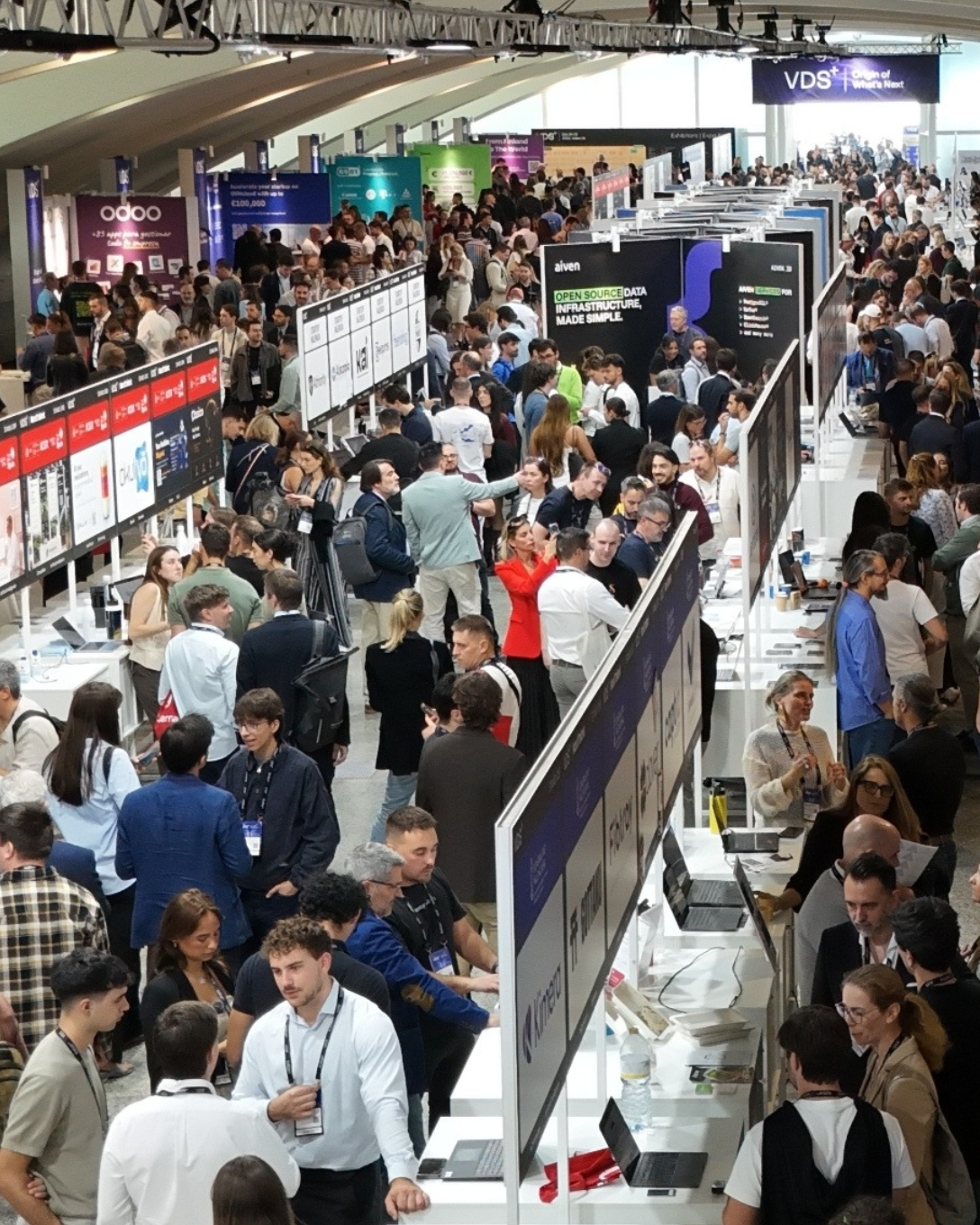
The ninth edition of VDS has brought together, for the second consecutive day at the City of Arts and Sciences in Valencia, more than 12,000 professionals from over 120 countries, 3,000 startups and scaleups, 1,500 corporations, over 800 investors managing more than €300 billion in assets, and more than 600 speakers.
Under the theme “GENESIS. Origin of What’s Next”, VDS 2026 explores how emerging technologies are transforming industries and business models, with a particular focus on artificial intelligence, defence, space, energy and the capabilities Europe needs to develop to compete internationally. The initiatives presented during the second day also reflect VDS’s evolution into a platform capable of connecting businesses, institutions, universities and investors to drive projects that extend well beyond the tech event itself.
Valencia Unveils Its Roadmap for Europe’s Semiconductor Industry at VDS
One of the day’s major milestones was the presentation of Valencia’s semiconductor roadmap and the Valencian Regional Government’s technical contributions to the European Chips Act 2.0 strategy. The initiative aims to establish a shared position among the sector’s leading stakeholders and strengthen the Valencian Community’s participation in European value chains.
The proposal forms part of the European Union’s evolving strategy to strengthen Europe’s technological autonomy, reduce industrial dependencies and accelerate the development of essential components for sectors including artificial intelligence, automotive, defence and telecommunications.
The roadmap seeks to move beyond isolated initiatives towards a coordinated strategy that integrates specialised talent development, research, technology transfer, industrial capacity and public-private collaboration, connecting semiconductor development with the needs of companies using these technologies.
The initiative brings together the capabilities of the Valencian Regional Government, Valencia Silicon Cluster, Valencia City Council and Valencia Innovation Capital, the University of Valencia, the Polytechnic University of Valencia, Startup Valencia, AVIA, Espai Aero, Cluster Digital and Plug and Play, among other stakeholders.
Its objective is to leverage the scientific, technological and industrial expertise already present in the Valencian Community to attract new projects, strengthen its role in the European semiconductor industry and turn innovation into a competitive advantage for local businesses.
Startup Valencia Establishes an International Advisory Board to Drive Valencia’s Global Ambitions
Valencia’s international positioning was at the centre of another strategic announcement at VDS 2026, with the unveiling of Startup Valencia’s International Advisory Board, an advisory body comprising international business and technology leaders who will help strengthen the Valencian tech industry’s connections with the world’s leading innovation, investment and business development hubs.
The announcement took place on the Main Stage during the session “Why Valencia? An International Advisory Board for a Global Ambition”, moderated by Juan Luis Hortelano, President of Startup Valencia, and featuring three of its founding members: Ann Hiatt, former Chief of Staff to Eric Schmidt at Google and former colleague of Jeff Bezos at Amazon; Laura Urquizu, CEO and President of Red Points; and Christian Teichmann, CEO of Burda Principal Investments and a member of the Executive Board of Hubert Burda Media.
The initiative addresses one of the challenges facing European tech ecosystems: while access to talent, universities and innovative companies is essential, international connections that facilitate access to capital, customers, strategic partners and markets are equally important.
Through this new advisory body, Startup Valencia reinforces its ambition to position Valencia as a global technology innovation hub and a business bridge between Europe, Latin America and the United States, enabling more companies to scale internationally from the city.
Infanta Elena Visits VDS During a Day Marked by Strong Institutional Representation
Her Royal Highness Infanta Elena of Spain visited VDS 2026 today at the City of Arts and Sciences in Valencia to gain firsthand insight into the scale of its ninth edition and the activities of a gathering that brings together startups, major corporations, investors and international technology industry leaders.
The second day also welcomed representatives from the Spanish Government, the Valencian Regional Government and other institutions, including Jordi García Brustenga, Secretary of State for Industry; José Luis Díez, Second Vice President and Regional Minister of the Presidency of the Valencian Regional Government; and José Antonio Rovira, Regional Minister of Economy, Finance and Public Administration.
Other institutional visitors included Juan Bravo, Deputy Secretary for Finance, Housing and Infrastructure of the People’s Party; Alma Alfonso, Member of Parliament for Valencia; César Sánchez, Member of Parliament for Alicante; and Belén Hoyo, Member of the Spanish Congress of Deputies for Valencia, among other public representatives.
New Data on Startups, Investment and Innovation in the Valencian Community
The second day of VDS also featured the presentation of key indicators on the development of Valencia’s tech ecosystem through three complementary research initiatives: the Startup Valencia Startup Observatory, the BIGBAN Investors Investment Observatory, and the LAB Observatory for R&D&I, Technology and Entrepreneurship, produced by Ivie in collaboration with Fundación LAB Mediterráneo.
Held at the Fundación LAB Pavilion, the session examined the evolution of entrepreneurial activity and its connections with investment and research, three fundamental dimensions for building a competitive technology industry capable of creating new businesses and jobs.
The same venue also hosted the presentation of Federación Comunitat Startup, an initiative bringing together entrepreneurial communities from the Valencian Community’s three provinces, with the participation of Startup Valencia, XarxaTEC and Alicantec.
The new federation aims to strengthen cooperation across the region, share resources and create new opportunities for startups, investors and professionals, expanding the entrepreneurial community’s ability to represent its interests and build connections throughout the Valencian Community.
CaixaBank DayOne Expands Its Partnership with Startup Valencia
New corporate partnerships also featured prominently during the morning, with the expansion of the collaboration between Startup Valencia and CaixaBank DayOne, formalised at the CaixaBank DayOne Pavilion at VDS.
The agreement strengthens the financial institution’s involvement in the Startup Valencia Corporate Innovation Club, an initiative connecting large corporations with startups and scaleups to encourage innovation, develop joint projects and generate new business opportunities.
CaixaBank DayOne, which specialises in financial services for technology and innovation-driven companies and their investors, further consolidates its participation in a business community working throughout the year to connect corporate needs with solutions developed by the entrepreneurial ecosystem.
Open innovation also took centre stage with Peninsula’s presentation of the report “From Challenge to Impact: Lessons from Spain’s Open Innovation Ecosystem” at the CaixaBank DayOne Pavilion.
The study examines lessons learned across Spain’s open innovation ecosystem and the challenges companies face in turning collaboration with startups into tangible business outcomes. It highlights the importance of ensuring these projects address specific challenges and contribute to developing new solutions with real-world applications.
Artificial Intelligence, Digital Finance and Sport Showcase New Applications of Technology
The transformation of business models continued to feature prominently on the Main Stage, with sessions exploring applications of artificial intelligence, the convergence of traditional finance and blockchain technologies, and new tools reshaping sectors such as education and sport.
Among the participants was Volodymyr Nosov, Founder and President of W Group and associated with WhiteBIT, who explored how decentralised technologies are finding applications in the traditional economy during his session, “Building Bridges: How Web3 Is Transforming Web2”. These applications range from digital payments and asset tokenisation to digital identity and traceability.
Nosov’s participation also highlighted connections with international sport through WhiteBIT, a company with sponsorship agreements with FC Barcelona and Juventus FC that is developing initiatives focused on new forms of digital engagement between clubs and fans.
The relationship between technology and elite performance was also the focus of a session featuring César Azpilicueta, Spanish footballer and UEFA Champions League winner, who joined Diego Ferragud, Programme Director at VDS, on the Main Stage for “Hacking Elite Performance: How SportsTech Is Redefining Athlete Longevity”.
Azpilicueta drew on his experience in elite football to explore how biometric data, recovery technologies, sleep monitoring and new analytical tools are transforming athletes’ preparation and their ability to sustain high performance over longer periods.
Artificial intelligence also shaped the discussion on the future of learning, with Dmytro Voloshyn, Co-Founder and CTO of Preply, an international language learning platform that reached a valuation of $1.2 billion in 2026 and connects more than 150,000 tutors with students across 180 countries.
His contribution focused on how generative artificial intelligence can be used to personalise education, improve tools that support teachers and expand access to learning without replacing the value of human interaction.
At the NextTalent Stage, the session “How Can We Ensure That Innovation Generates Meaningful and Positive Impact on Society?” brought together Concepción Monje, Professor at Universidad Carlos III de Madrid; Nuria Marcos, Managing Director of PONS IP; and Pilar Mateo, Founder and CEO of Women Paint Too, in a discussion moderated by Rosa Sanchidrián, Rector of the European University of Valencia.
The discussion explored the impact of artificial intelligence and robotics, the importance of incorporating diverse perspectives into the development of new technologies, and the need for innovation to address real societal needs.
From Regional Ecosystems to Global Technology Companies
The international growth of technology companies was another major theme of the second day, with Saeed Amidi, Founder and CEO of Plug and Play, and Carolin Wais, Partner, EMEA Ventures, examining the conditions needed for regional tech ecosystems to produce companies capable of competing in global markets.
The conversation addressed the importance of international networks, collaboration with major corporations, access to capital and startups’ ability to develop projects with growth potential beyond their domestic markets.
Financing was also on the agenda, with Enrique Linares, Founding Partner of Plus Partners, participating in a session on funds of funds and investment structures that can help strengthen Europe’s capacity to develop and scale technology companies.
These discussions formed part of a wider programme that, across both days, explored the role of chips and AI hardware, the development of digital infrastructure, emerging defence capabilities and the convergence of space, cybersecurity and communications.
NextTalent Connects Education and Industry Through Solutions to Real-World Challenges
Technology talent also played a prominent role on the second day through VDS NextTalent, the platform driven by Startup Valencia with the University of Valencia and the Polytechnic University of Valencia as NextTalent Partners.
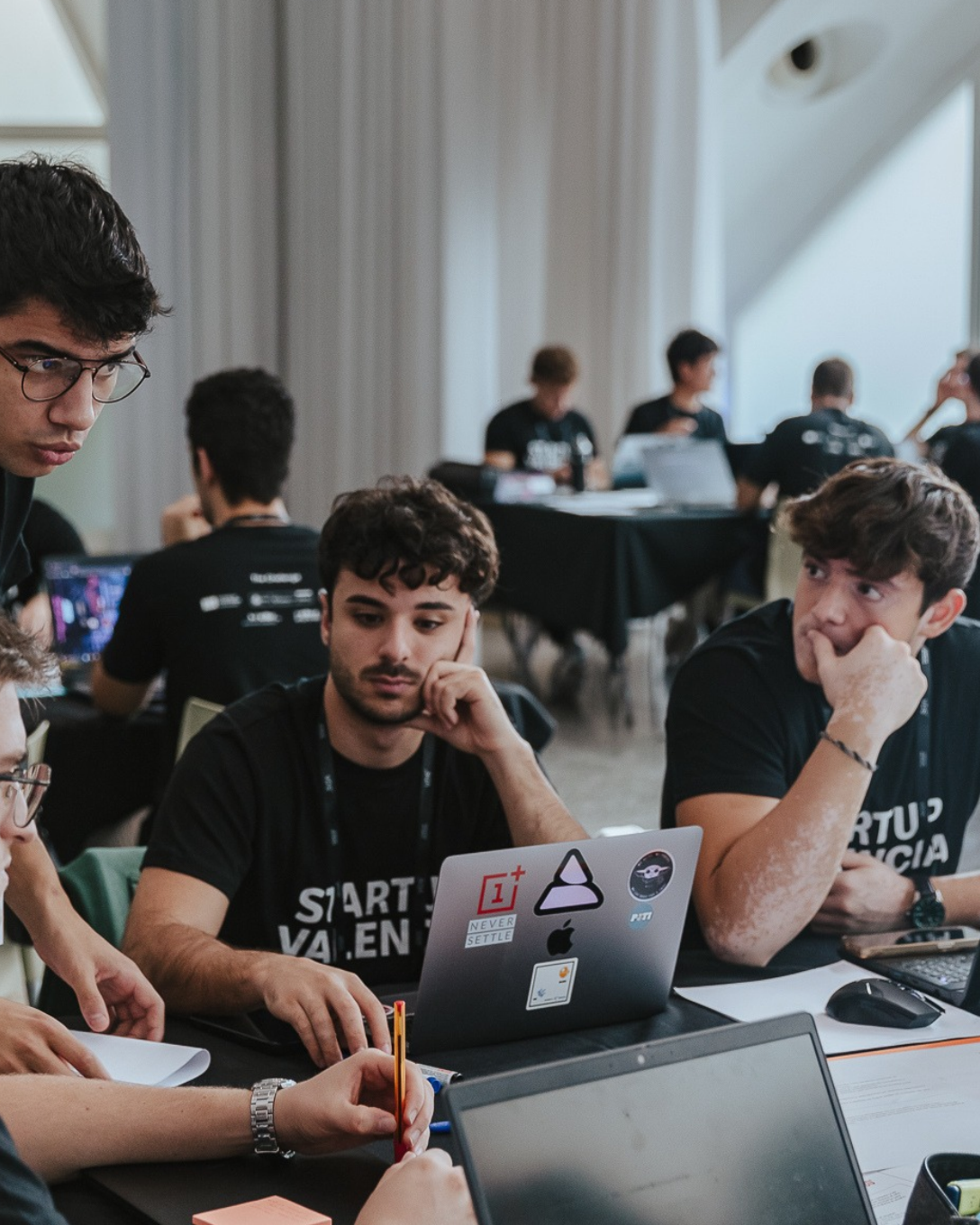
Following yesterday’s working session at The Challenge, the VDS hackathon, participating teams presented their proposals today to a jury tasked with evaluating solutions developed in response to real innovation challenges.
The initiative brought together more than 50 participants, who put their technical knowledge, creativity and ability to work in multidisciplinary teams to the test, bringing education closer to the needs of technology companies.
The winning team will be announced this afternoon during the VDS 2026 closing ceremony on the Main Stage, where it will receive recognition in front of representatives from the international technology industry.
VDS Startup Competition Reaches Its Final Stage as the Best Startup of 2026 Is Set to Be Named
The ninth edition of VDS enters its decisive phase this afternoon with the final of the VDS Startup Competition, organised in collaboration with Plug and Play, concluding an international selection process designed to identify some of the technology projects with the greatest growth potential.
This year’s competition received 1,560 applications from 87 countries, from which 25 finalist startups were selected. Their projects span artificial intelligence, healthcare, sustainability, smart mobility, fintech, Deep Tech, logistics, Industry 4.0 and cybersecurity.
During VDS, these companies have had the opportunity to showcase their solutions to investors, corporations and representatives of the international technology industry, establishing connections that could open up new opportunities for funding, collaboration and business expansion.
The winner of the VDS Startup Competition 2026 will be announced during the awards and closing ceremony, taking place this afternoon on the Main Stage at the City of Arts and Sciences in Valencia.
The ceremony will feature Juan Luis Hortelano, President of Startup Valencia; Nacho Mas, CEO of Startup Valencia and VDS; Paula Llobet, Valencia City Councillor for Tourism, Innovation and Investment Attraction; Carolina Rodríguez, CEO of ENISA; Jaime Peris, Special Commissioner for Reindustrialisation at Spain’s Ministry of Industry and Tourism; Ana Carrau Mínguez, Founder and CEO of The Impact Project; Alberto Gutiérrez, CEO of Aquaservice; and Teresa Riesgo, Secretary General for Innovation at Spain’s Ministry of Science, Innovation and Universities.
The ceremony will be followed by the Closing Party by NextTalent in the Lake Area, bringing to a close two days in which Valencia has welcomed companies, investors and international technology industry leaders.
With its ninth edition, VDS consolidates its role as an international platform for building new connections between technology, capital, talent and industry, helping to drive strategic initiatives, new investment opportunities and globally ambitious business projects from Valencia.
Support from Major Corporations and Institutions
VDS 2026 is supported by major corporations, technology companies and national and international institutions. Banco Santander participates as Diamond Sponsor, while Valencia Innovation Capital, an initiative of Valencia City Council, serves as Host Partner. The Valencian Regional Government joins as VDS Defense Partner, Plug and Play as VDS Competition Partner, and the University of Valencia and the Polytechnic University of Valencia as NextTalent Partners.
Supporting Sponsors include the Republic of Estonia, Work in Estonia, Tallinn, Fundación LAB, CaixaBank DayOne, Malta Enterprise, OVHcloud Startup Program, IBM, Lãberit, Opentop by Valenciaport, BStartup by Banco Sabadell, EY, Burda Principal Investments, Suma Capital, PropHero, Wayra Telefónica, Aquaservice, MAPFRE, Microsoft, TEMU, OMN Hub, RRHH Digital and Orange, among other organisations contributing to the international reach of the ninth edition.
VDS 2026 also benefits from the participation of companies connected to Startup Valencia through its Corporate Innovation Club, including BStartup by Banco Sabadell, Wayra Telefónica, Plug and Play, HP, BBVA Spark, Marina de Empresas, Banco Santander, Innsomnia Group, CaixaBank DayOne, Naturgy, Sesame, Zinco and Santalucía Impulsa.
At the institutional level, VDS 2026 continues to receive support from its Institutional Partners, including Valencia City Council, Valencia Innovation Capital, the Valencian Regional Government, the University of Valencia, the Polytechnic University of Valencia, the University of Valencia Science Park, the Valencian Institute of Finance (IVF), the City of Arts and Sciences, CDTI, ENISA, Red.es, ICEX, Madrid Innovation and the Miguel Hernández University Science Park, alongside Spanish Government bodies.
This collective support strengthens VDS’s role as a platform connecting the public and private sectors, creating new opportunities for business, investment and international collaboration while contributing to Valencia’s positioning as a global technology innovation hub.