
The energy transition in Valencia is not being driven by targets alone, but by applied technology, execution, and verification. At a European scale, the challenge is simultaneous: decarbonising generation, electrifying demand, and digitalising the system to operate with more renewables without losing stability. The issue is no longer simply installing capacity, but integrating it into grids that are not expanding at the same pace, reducing permitting and connection times, adding flexibility through storage and demand management, and sustaining the entire process with solid metrics that separate real impact from narrative.
Global data helps illustrate this tension. In 2024, 585 GW of new renewable capacity were added worldwide, accounting for more than 90% of total annual electricity expansion, according to IRENA. Source: IRENA, Record Breaking Annual Growth in Renewable Power Capacity (26 Mar 2025). At the same time, energy emissions continued to rise: the IEA estimates that energy-related CO₂ reached 37.8 Gt in 2024, with annual growth of 0.8%, partly driven by record temperatures that increased cooling demand. Source: IEA, Global Energy Review 2025, CO2 emissions. In Europe, the roadmap is defined by a dual mandate: reduce net emissions by at least 55% by 2030 compared to 1990 levels and increase the renewable share to at least 42.5% by 2030, with an aspiration of 45%. Sources: European Commission, 2030 climate targets and European Commission, Renewable energy targets.
In this context, startups occupy a critical space: turning available technologies into deployable solutions, with auditable metrics and adoption models that reduce friction. From the Valencian tech ecosystem, startups such as Devera, Aldea Energy and Enerlind, among many others, illustrate three complementary levers of change: rigorous environmental impact measurement, collective self-consumption and distributed energy, and renewable generation integrated into residential buildings. Three different vectors, one shared objective: accelerating the transition with solutions that work in the real world, with manageable costs, timelines and operations.
What is slowing down the energy transition today: grid, permits, connection and flexibility
In public discourse, “energy transition” is often translated into new megawatts. In practice, the bottleneck usually lies in what happens after the announcement: permits, available grid capacity, effective connection, day-to-day operation and the ability to respond to variability. That is why, when talking about acceleration, the critical variable is not only technology, but the set of processes that turn a project into real energy delivered to the consumer.
The electricity grid, particularly distribution networks, is becoming a limiting factor in many territories. Without available capacity and grid reinforcements, generation is not connected on time and deployment slows down. And as variable renewable generation increases, flexibility ceases to be an “extra” and becomes a condition for stability. Flexibility means storage, demand response, aggregation and, above all, the ability to operate the system with signals and data that allow renewables to be integrated without raising systemic costs or transferring complexity to the end user.
Measuring properly to truly decarbonise: from claim to verifiable evidence
One of the main deficits in corporate sustainability has historically been the lack of precise, comparable and accessible metrics. Many organisations have advanced in measuring direct emissions, but face greater difficulty rigorously estimating impacts associated with materials, suppliers, logistics, use and end of life. When analysis moves down to the product level, the challenge intensifies: assessing environmental impact using a life cycle approach requires defining boundaries, assumptions and scenarios, as well as relying on emission factors and environmental databases. The difference between measuring quickly and measuring well is not minor; it determines which decisions are made, which investments are justified and which reductions are truly attributable.
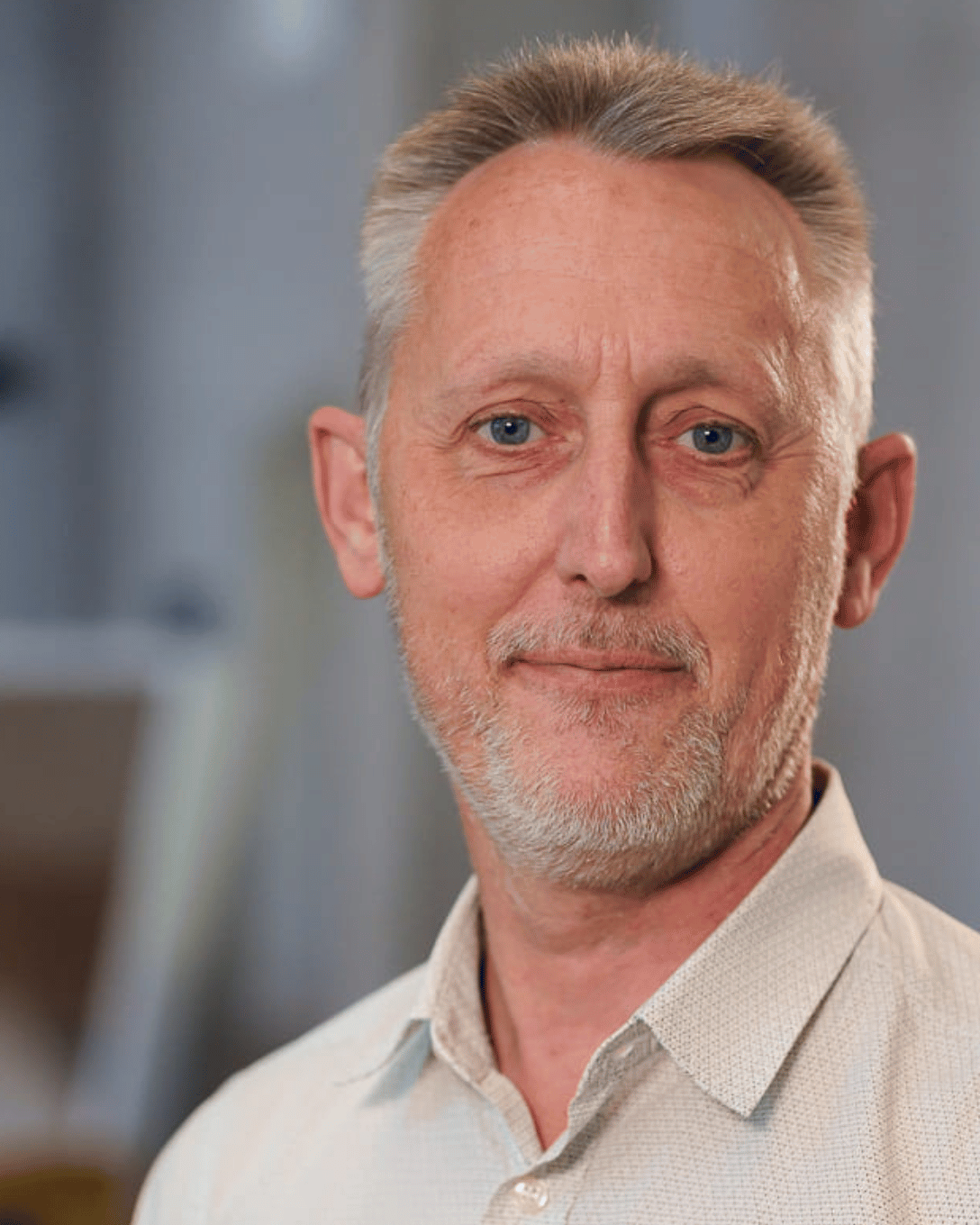
Sébastien Borreani, founder of Devera, summarises it clearly: “Calculating the environmental impact of a product throughout its entire life cycle has traditionally been a slow, expensive process accessible only to large corporations. We democratise that access. Because you cannot improve what you do not measure.”
His proposal seeks to address the scalability bottleneck by combining automation and artificial intelligence with environmental reference data, enabling more companies to measure, compare alternatives and prioritise reduction actions with greater agility. This approach becomes especially relevant in a context where sustainability is shifting from narrative to verification and where evidence is becoming a competitive asset. Even at a macro scale, the IEA highlights that the adoption of clean technologies is limiting emissions growth, avoiding 2.6 billion additional tonnes of CO₂ per year. Source: IEA, Global Energy Review 2025.
Collective self-consumption and distributed energy: access to renewables without friction
While rigorous measurement is key to reducing emissions effectively, the other major front is transforming the energy model to make it more distributed, resilient and participatory. In Spain, self-consumption and its collective modalities are opening a path for citizens and SMEs to access renewable energy even if they do not have their own rooftop or investment capacity.
Aldea Energy addresses two structural challenges: limited access to renewables for users who cannot install generation on their own roof and dependence on a centralised model with inefficiencies and exposure to price volatility. Its proposal is based on distributed generation and collective self-consumption, connecting users to nearby solar plants without the need for upfront investment or their own infrastructure. The differentiating value lies not only in technology, but in turning a complex reality, with technical, administrative and contractual variables, into a simple experience for the end user.
Roberto Rubio, founder of Aldea Energy, explains that the main challenge today is accelerating the transition to a more distributed and participatory model, overcoming administrative, regulatory and cultural barriers. “Today the technology is available, citizens are aware and companies are looking for sustainable alternatives; however, grid connection processes are slow, regulation evolves more slowly than demand, and there is widespread lack of knowledge about how to access renewable energy without investment,” he explains.
He concludes that the challenge is not technical, “it is about making it agile, accessible and understandable for everyone.” In other words, the transition is slowed less by the lack of solutions and more by friction: timelines, coordination, uncertainty and lack of clarity. Reducing that friction is, in many cases, what determines real adoption. At a European level, the objective of raising renewables to at least 42.5% by 2030 depends as much on new capacity as on effective integration and deployment. Source: European Commission, Renewable energy targets.
Solar energy integrated into housing: energy transition in buildings without additional cost
A complementary approach is offered by Enerlind, which works to ensure the transition reaches the core of households without generating additional costs or added complexity in construction. Guillermo López, CEO and founder of Enerlind, frames it as follows: “At Enerlind we work on an increasingly relevant challenge: how to advance the energy transition within buildings without creating additional costs for the buyer or added complexity in the construction model.”
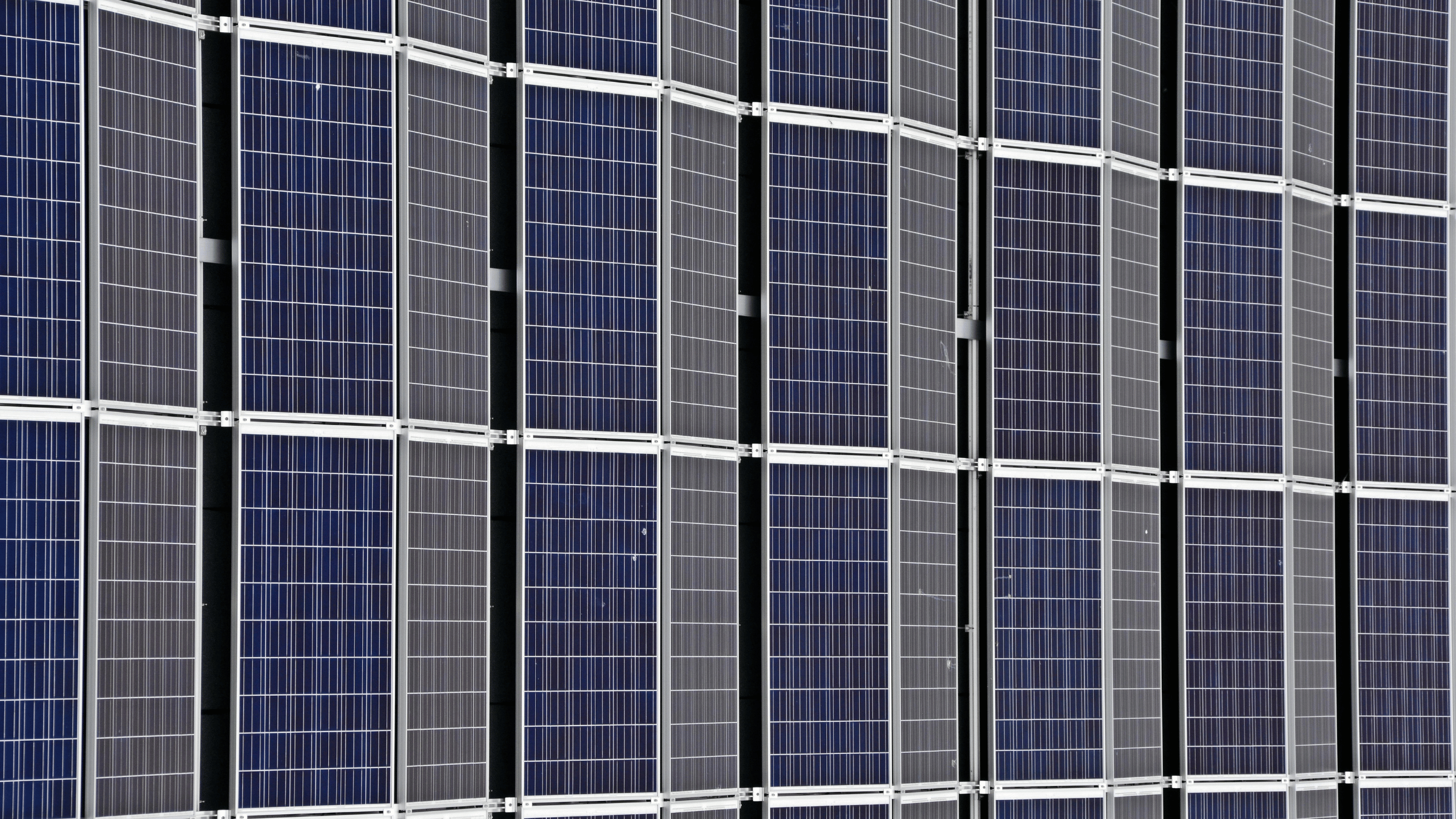
Enerlind’s innovation consists of integrating photovoltaic technology into monoblock shutters, a common façade element, turning it into a distributed energy generator for each home. This approach follows a clear logic: in construction, adding independent systems usually increases coordination, timelines and budgets. Integrating generation into an already planned component reduces adoption barriers and facilitates deployment, especially in residential projects where the end buyer penalises any additional complexity.
This makes it possible to produce energy locally and for the homeowner to perceive a direct economic benefit. Enerlind estimates reductions in electricity bills ranging from 10% up to 60%, depending on variables such as orientation, irradiation, shading and consumption profile. “We do not add an independent system to the building; we transform a common element into one that is proprietary and productive. Installation is comparable to that of a conventional motorised shutter, allowing renewable generation to be incorporated without significantly altering construction budgets,” he notes.
Beyond the device, the underlying message is relevant: if the transition is integrated into standard construction processes and delivers measurable improvement for the user, it stops being an extra layer and becomes a natural part of the housing product.
Startups as catalysts of change in Valencia
The energy transition requires speed, but also rigour. That implies questioning inertia and solving specific problems where the system gets stuck: impact measurement and verification, adoption experience, technical integration in buildings and reduction of friction in connection and operation.
In this sense, startups provide distinctive value through rapid implementation capacity, technological specialisation and the ability to connect traditionally separate sectors. Their contribution is not to replace major system players, but to accelerate the step between what is possible and what is deployable, and to do so with models that enable mass adoption.
In Valencia, this dynamic is reinforced by the convergence of industry, technical talent, applied research and an entrepreneurial community oriented towards impact solutions. Aldea Energy highlights that the Valencian ecosystem is consolidating as one of the most dynamic hubs of energy innovation in Spain. “For us, Valencia is the place where it is best understood that the energy transition must be local, distributed and participatory,” they point out.
Enerlind expresses a similar view, emphasising the opportunity for collaboration between construction, energy and technology to make sustainability profitable and accessible in residential housing, while Devera underlines the need for rigorous tools to measure and reduce footprint with credibility.
Key indicators: where the energy transition is decided in practice
From here onwards, the transition is decided less by slogans and more by five indicators that separate intention from deployment. The first is electrification, because the pace of replacing fossil fuels with electricity in mobility, industry and buildings multiplies demand and determines how much new renewable generation and grid capacity will be required. The second is renewable capacity installed versus capacity effectively connected and operational, because announcements do not decarbonise; assets entering operation on time do. The third is the grid and congestion, especially in distribution, where available capacity, connection times and grid reinforcements become the most common bottleneck as renewable penetration accelerates. The fourth is system flexibility, including storage, demand response and aggregation, because without flexibility renewable integration becomes more expensive and operations more fragile. The fifth is measurement and verification, because without traceable and auditable metrics capital cannot be allocated rationally and sustainability risks degrading into reputational noise.
This framework helps explain a frequent reality: renewable growth alone does not guarantee immediate emission reductions if grid constraints, connection capacity and flexibility are not resolved. When system operation does not keep pace, inefficiencies and costs emerge, and part of the potential is lost. That is why acceleration requires treating the transition as a complete system, not as a sum of projects.
What comes next
In the coming years, the focus will shift from installing renewables to making the system operable at scale. This means, first, accelerating permitting and grid connection through clearer, standardised and faster processes, because if connection does not keep pace, the transition slows down even if the technology exists. It also means investing in grids and digitalisation, with greater distribution capacity, better monitoring and control, because the grid will become the limiting factor in many territories. It requires scaling flexibility with front-of-the-meter and behind-the-meter storage, demand response and aggregation, to integrate renewables without increasing systemic costs. And it requires making sustainability verifiable, with clear methodologies and defensible data, especially as Europe raises its 2030 targets and requirements. Finally, it requires integrating the transition into housing and SMEs without friction, with solutions that do not complicate construction, reduce upfront investment and deliver measurable savings.
Within this framework, cases such as Devera, Aldea Energy and Enerlind help illustrate how the transition accelerates when technical rigour is combined with a focus on adoption: measuring better, deploying more easily and generating closer to consumption.