
At a time when science is advancing at an unprecedented speed, the real challenge is no longer just about discovery, but about turning knowledge into real impact. Ensuring that research leaves the laboratory, becomes concrete solutions, and reaches society remains one of the great challenges of our time.
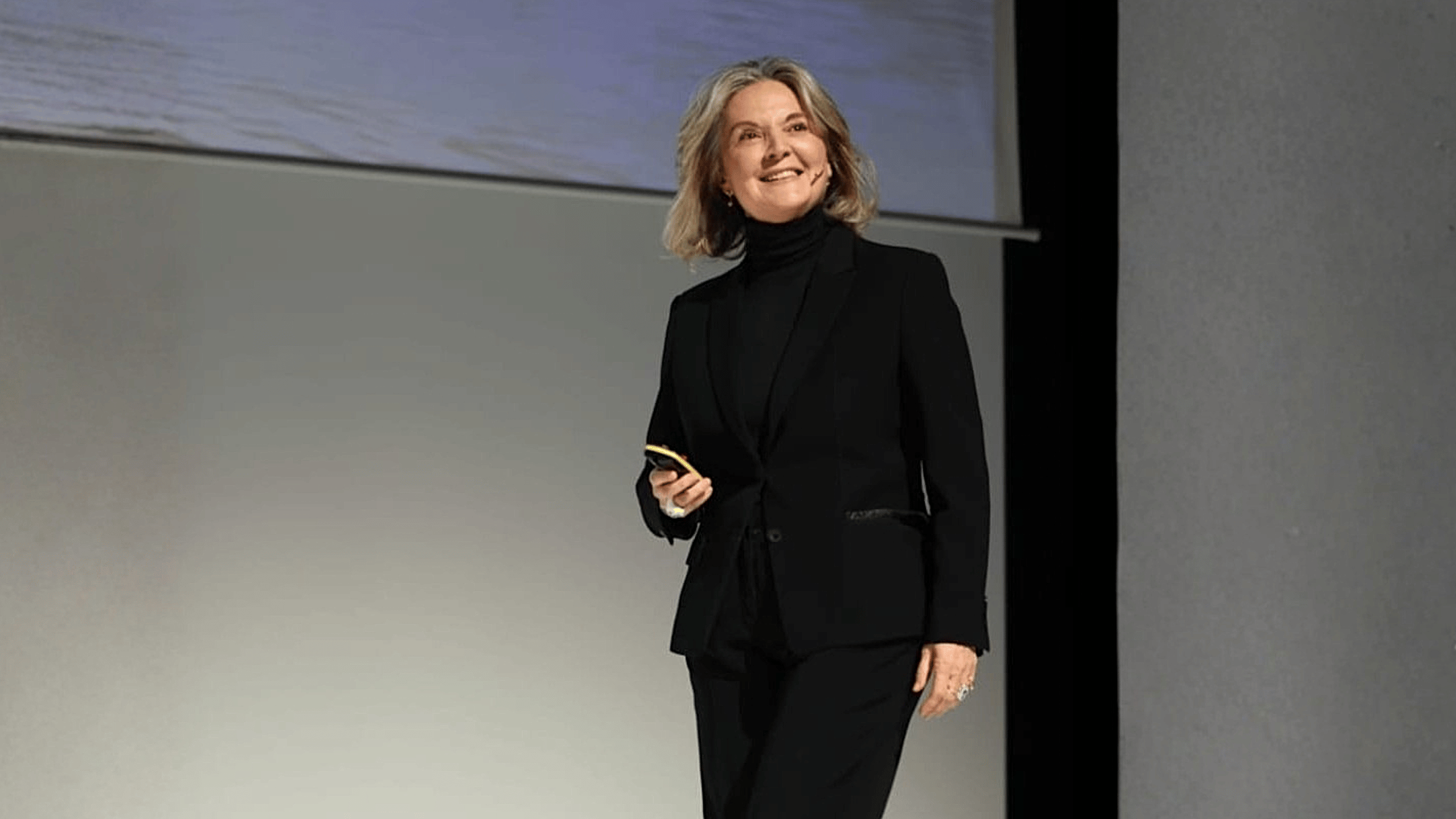
Pilar Mateo has spent decades proving that this bridge is possible. An internationally recognized scientist, entrepreneur, and advocate of social impact as the core of innovation, her trajectory breaks the traditional boundaries between science, business, and commitment to people. Her work demonstrates that scientific excellence is not incompatible with a transformative vocation, and that talent, when connected to purpose, can generate deep and sustainable change.
On the occasion of the International Day of Women and Girls in Science, we spoke with Pilar Mateo, president of Inesfly Corporation and Vice President of Impact of the Board of Directors of Startup Valencia, to reflect on the challenges of scientific transfer, the role of women in research and entrepreneurship, and the need to build ecosystems where innovation is measured not only by technological advances, but also by its ability to improve lives.
Pilar, your trajectory demonstrates that science can generate real impact when it manages to leave the laboratory. At what point do you think scientific transfer is still failing today, especially in contexts such as Spain or Europe?
Turning theoretical knowledge into practical applications is an enormous risk that not everyone is willing to take. Let us consider that from the moment a project begins until results are published in a prestigious international journal, we are talking about a minimum of around five years, sometimes more. Years of waiting, only for the results not to meet expectations and still be published because project evaluators must justify their work in the form of a publication.
In 2018, I was asked to develop an ad hoc product to combat Aedes aegipty, the transmitter of dengue. It is now 2026, and although four publications have already been released, we expect the final results to be published soon. In between, COVID delayed the project, but even so, that means eight years of waiting. I believe it takes too long, especially when an epidemic suddenly arrives and within a few months vaccines are already approved. In other words, when it is in someone’s interest, timelines are significantly shortened.
Innovation with social impact is often discussed, yet it is rarely measured rigorously. From your experience, how can real impact be distinguished from purely rhetorical impact?
In my case, measuring impact has always been relatively simple. For example, in the most recent project I mentioned, carried out in Cúcuta, Colombia, the University of Fribourg applied Inesfly SATIS to the outdoor wash areas of 20,000 homes and managed to reduce dengue by almost 60 percent. The application cost approximately 3 dollars per household, indicating an excellent cost benefit ratio. This is the most evident way to verify the real impact of projects.
Access for women to scientific careers has improved, but glass ceilings persist. Where do you identify the most invisible barriers today, both for women and for other profiles coming from situations of inequality?
Indeed, invisible barriers act like glass walls that are very difficult to identify, yet they are there. In the world of science, there is still a long way to go. It is a very male dominated environment where women, simply for being women, are not valued in the same way. This is reflected, for example, in the small number of women who receive Nobel Prizes or other awards with significant financial recognition. We are allowed to climb to the top of the mountains, but we do not appear in the photo holding the flag of the achievement. I extend this comment to people from developing countries whose achievements are rarely valued as they deserve.
You have promoted initiatives such as Women Paint Too to make female talent more visible from a different perspective. Why is it important to broaden the traditional narrative of science and creativity?
Because we are experiencing a social regression, with groups determined to deny the obvious and to question scientific advances without foundation. Thanks to social media, groups such as anti vaccine movements, climate change deniers, or even those who question that the Earth is round, appear as holders of a great discovery, despite ideas that contradict common sense and reason. Where they would once have been considered charlatans, they now appear as enlightened figures.
In this world of X, TikTok, and Facebook, the concise remark, the short phrase about a topic, has replaced reasoned explanations. What once seemed like an opportunity to improve communication between people has, through the frivolous and commercial bias of these platforms, generated cultural and scientific impoverishment.
You are part of the Board of Directors of Startup Valencia as Vice President of Impact. What does it mean to you to introduce impact as a strategic dimension of the ecosystem, and not just as a reputational element?
Science, and our professional lives in general, only make sense when they serve to improve people’s lives. That is the meaning I give to the term impact. It is not our personal reputation that should matter, but our ability to make the world function better, or at least not make it worse.
From science to entrepreneurship, what lessons do you think the startup world should incorporate more urgently to generate more solid and sustainable solutions?
I am not a technology expert to say how startups should operate. Today, I imagine that artificial intelligence must be a new tool that everyone needs to understand.
However, over time I have seen the importance of working with professionals from different fields in order to gain the broadest possible perspective. For example, in the field of endemic diseases, I miss greater collaboration between doctors, virologists, pharmacists, chemists, and veterinarians, because viruses are very intelligent and often have an animal origin that requires a different way of understanding problems.
Finally, what message would you like to share with girls and young women who feel curious about science and entrepreneurship, but doubt whether there is space for them and their way of understanding the world?
There is a Latin phrase that says “per aspera ad astra,” which means something like reaching the stars requires effort. Science and knowledge are paths that require dedication, study, and above all, great curiosity. For the philosopher Heidegger, curiosity is one of the essential traits of everyday life, characterized by a continuous and ever renewed desire to see, to know, to learn. Maintaining curiosity throughout our lives, as something dynamic, is the message I would like to convey.